
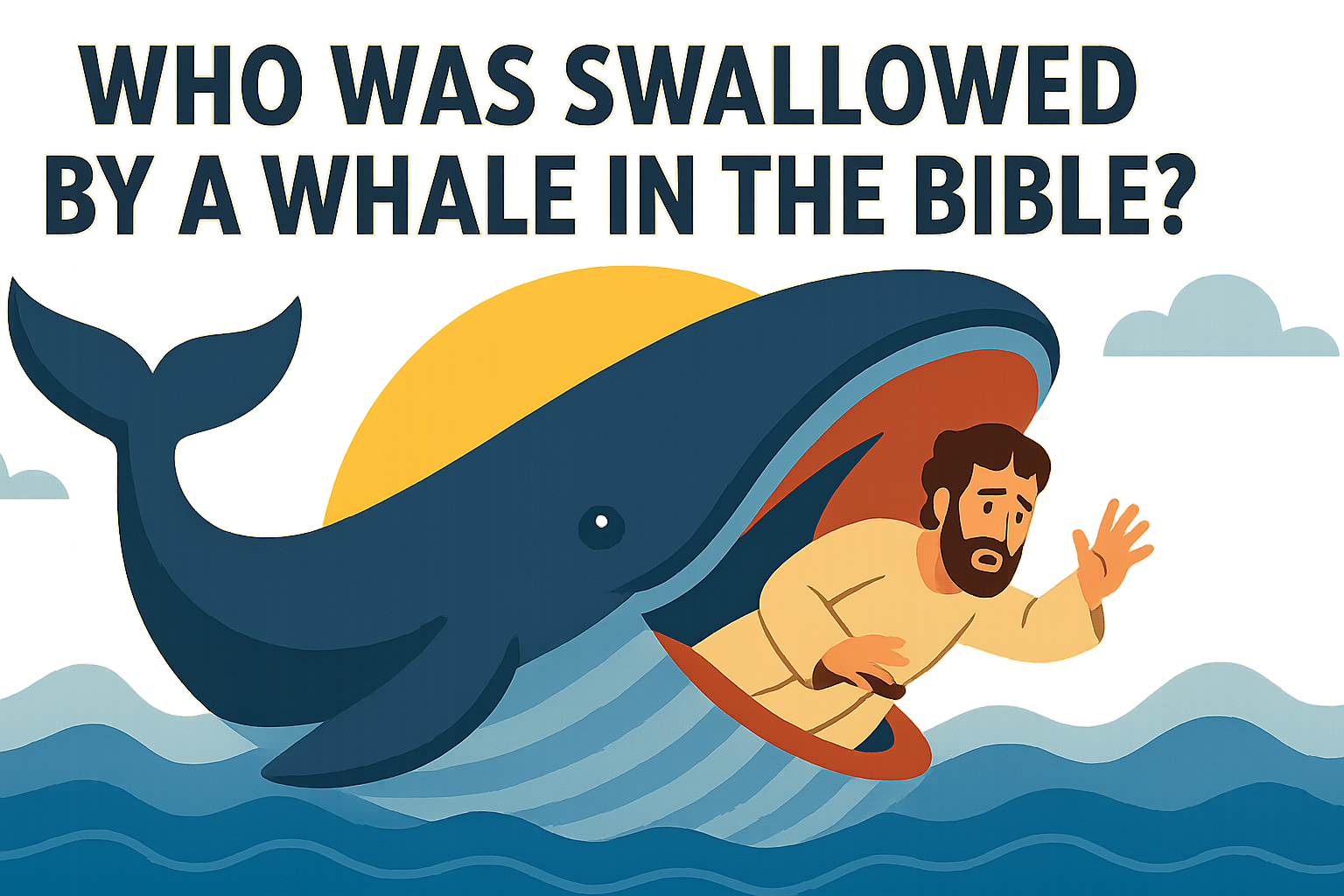
In the Bible, the prophet Jonah is famously known for being swallowed by a great fish, often referred to as a whale. This event is narrated in the Book of Jonah, which is part of the Old Testament. Jonah’s experience is central to his story and has significant theological implications.
The account of Jonah being swallowed by the great fish begins when God calls him to go to the city of Nineveh and preach against its wickedness. Instead of obeying, Jonah attempts to flee from God by boarding a ship heading in the opposite direction. When a violent storm arises, the sailors, fearing for their lives, cast lots to determine who is responsible for the trouble. The lot falls on Jonah, who admits he is the cause of the storm due to his disobedience.
The Call of Jonah
The story starts with God commanding Jonah to go to Nineveh, a prominent city known for its evil ways. In Jonah 1:1-2, it states, “The Lord gave this message to Jonah son of Amittai: ‘Get up and go to the great city of Nineveh. Announce my judgment against it because I have seen how wicked its people are.’” Nineveh was the capital of Assyria, a nation that was often at odds with Israel, making Jonah’s mission particularly daunting.
Jonah’s Flight
Instead of obeying God’s command, Jonah decides to escape to Tarshish, boarding a ship that would take him far away from Nineveh. This act of fleeing is significant as it symbolizes a rejection of God’s will. In Jonah 1:3, it says, “But Jonah got up and went in the opposite direction to get away from the Lord.” This initial act sets the stage for the dramatic events that follow.
The Storm at Sea
As Jonah travels on the ship, God sends a mighty storm that threatens to break the vessel apart. The sailors, terrified, cry out to their gods for help. In their desperation, they cast lots to identify who is responsible for the calamity. The lot falls on Jonah, who then acknowledges his disobedience to God. In Jonah 1:10, he tells them, “I am Hebrew, and I worship the Lord, the God of heaven, who made the sea and the dry land.”
Jonah’s Sacrifice
Understanding that Jonah is the cause of the storm, the sailors ask him what they should do to calm it. Jonah tells them to throw him overboard, believing this will appease God and stop the storm. Reluctantly, the sailors obey, and as soon as Jonah is thrown into the sea, the storm ceases. This act of sacrifice underscores Jonah’s acknowledgment of his wrongdoing and his willingness to face the consequences.
The Great Fish
Once Jonah is in the water, he is swallowed by a great fish, which many translations refer to as a whale. This event is recorded in Jonah 1:17: “Now the Lord had arranged for a great fish to swallow Jonah. And Jonah was inside the fish for three days and three nights.” This miraculous occurrence serves multiple purposes in the narrative.
Symbolism and Interpretation
The great fish symbolizes both judgment and mercy. While Jonah faces the consequences of his disobedience, he is also given a second chance to fulfill God’s command. Inside the fish, Jonah prays to God, expressing his distress and repentance. In Jonah 2:1-2, it says, “Then Jonah prayed to the Lord his God from inside the fish. He said, ‘I cried out to the Lord in my great trouble, and he answered me.’” This prayer highlights Jonah’s realization of his need for God, even in the depths of despair.
Theological Implications
The story of Jonah being swallowed by the great fish has profound theological implications. It emphasizes themes of obedience, repentance, and God’s mercy. Jonah’s initial refusal to go to Nineveh reflects the struggle many face when called to do something uncomfortable or challenging. Yet, through his experience, we see that God is persistent in His plans and gracious in offering redemption.
Foreshadowing Christ
Additionally, Jesus references Jonah’s time in the fish as a foreshadowing of His own death and resurrection. In Matthew 12:40, Jesus says, “For as Jonah was in the belly of the great fish for three days and three nights, so will the Son of Man be in the heart of the earth for three days and three nights.” This connection highlights the significance of Jonah’s story in the larger narrative of salvation history.
Conclusion of Part One
In summary, Jonah is the biblical figure who was swallowed by a great fish. His story illustrates the importance of obedience to God, the power of repentance, and the depth of God’s mercy. The account serves as a reminder that even in our moments of rebellion, God remains faithful and ready to offer us a path back to Him.
Jonah’s Prayer and Transformation
While inside the great fish, Jonah undergoes a significant transformation. His prayer, recorded in Jonah 2, reveals his deep anguish, recognition of his mistakes, and heartfelt repentance. He acknowledges God’s sovereignty, saying, “You threw me into the ocean depths, and I sank down to the heart of the sea” (Jonah 2:3). This moment of vulnerability marks a turning point in Jonah’s journey.
Jonah’s prayer reflects the anguish of a man who recognizes that he has strayed from God’s path. He describes his feelings of despair and isolation, stating, “I was buried beneath your wild and stormy waves” (Jonah 2:3). This imagery captures the gravity of his situation but also leads to an important realization: God is always present, even in the depths of despair. Jonah concludes his prayer with a vow to fulfill his promises to God, illustrating his commitment to obedience after experiencing God’s mercy.
God’s Response
After Jonah’s heartfelt prayer, God commands the fish to spit him out onto dry land (Jonah 2:10). This act is not just a physical rescue; it symbolizes God’s readiness to restore and forgive. Jonah’s experience in the fish serves as a metaphor for spiritual rebirth, demonstrating that after recognizing one’s faults and repenting, one can return to a right relationship with God.
The Second Chance
Following his miraculous rescue, Jonah receives a second chance to obey God’s call to go to Nineveh. The narrative emphasizes that God’s plans cannot be thwarted, even by human disobedience. In Jonah 3:1-2, God reiterates His command to Jonah: “Get up and go to the great city of Nineveh and deliver the message I have given you.” This repetition underscores the importance of the mission and God’s persistence in seeking repentance from the people of Nineveh.
Jonah’s response this time is markedly different. He goes to Nineveh and delivers God’s message of impending judgment. The city, known for its wickedness, surprisingly responds with humility and repentance, highlighting the power of God’s word and the potential for change, even in the most unlikely places.
The Impact of Jonah’s Message
The people of Nineveh, from the king to the common citizens, heed Jonah’s warning and fast in repentance. Their collective response emphasizes the theme of redemption that resonates throughout the Bible: no one is beyond the reach of God’s mercy. This reaction not only saves the city from destruction but also illustrates the transformative power of God’s message when delivered by a reluctant prophet.
Jonah’s Reaction to God’s Mercy
Interestingly, Jonah’s story does not end with the success of his mission. Rather, it culminates in his displeasure at God’s mercy toward Nineveh. After the city repents, God spares it from destruction, and Jonah reacts with anger and frustration (Jonah 4:1). This response reveals a deeper struggle within Jonah—his reluctance to accept that God’s mercy extends to those he views as enemies. It emphasizes a critical lesson: God’s love and grace are not limited to a select few but are available to all who seek Him.
The Lesson of the Plant
In an effort to teach Jonah about compassion, God causes a plant to grow and provide Jonah with shade. However, when the plant dies, Jonah expresses deep sorrow over its loss (Jonah 4:5-9). God uses this moment to illustrate His concern for all of creation, stating, “You cared about the plant, though you did not tend to it or make it grow. It sprang up overnight and died overnight. But Nineveh has more than 120,000 people who cannot tell their right hand from their left, and many animals as well. Should I not be concerned about that great city?” (Jonah 4:10-11). This poignant conclusion challenges readers to reflect on their attitudes toward mercy and compassion.
Lessons from Jonah’s Story
Jonah’s experience serves as a powerful reminder of several key spiritual lessons. First, it illustrates the importance of obedience to God’s calling, even when it is uncomfortable or challenging. Second, it highlights the depth of God’s mercy, which is available to all who turn to Him in repentance. Finally, it prompts believers to examine their own attitudes toward others, especially those they may view as undeserving of grace.
Questions for Reflection
- What does Jonah’s initial flight from God reveal about human nature and our tendency to resist God’s plans?
- How can we learn from Jonah’s transformation while in the fish and apply it to our own lives when we face trials?
- In what ways do we sometimes struggle to accept God’s mercy extended to others?
- What steps can we take to ensure we respond to God’s calling with obedience and an open heart?
Conclusion
Jonah’s story, particularly his time spent inside the great fish, is a profound narrative of disobedience, repentance, and the vastness of God’s mercy. It challenges believers to reflect on their relationship with God and others, urging them to embrace the call to share His love and grace with all. Ultimately, Jonah’s experience serves as a timeless reminder that no one is beyond redemption and that God’s plans are always at work, even when we cannot see them.
For more insights on the transformative power of repentance, visit this article. To explore the significance of God’s mercy in the biblical narrative, check out this resource.