
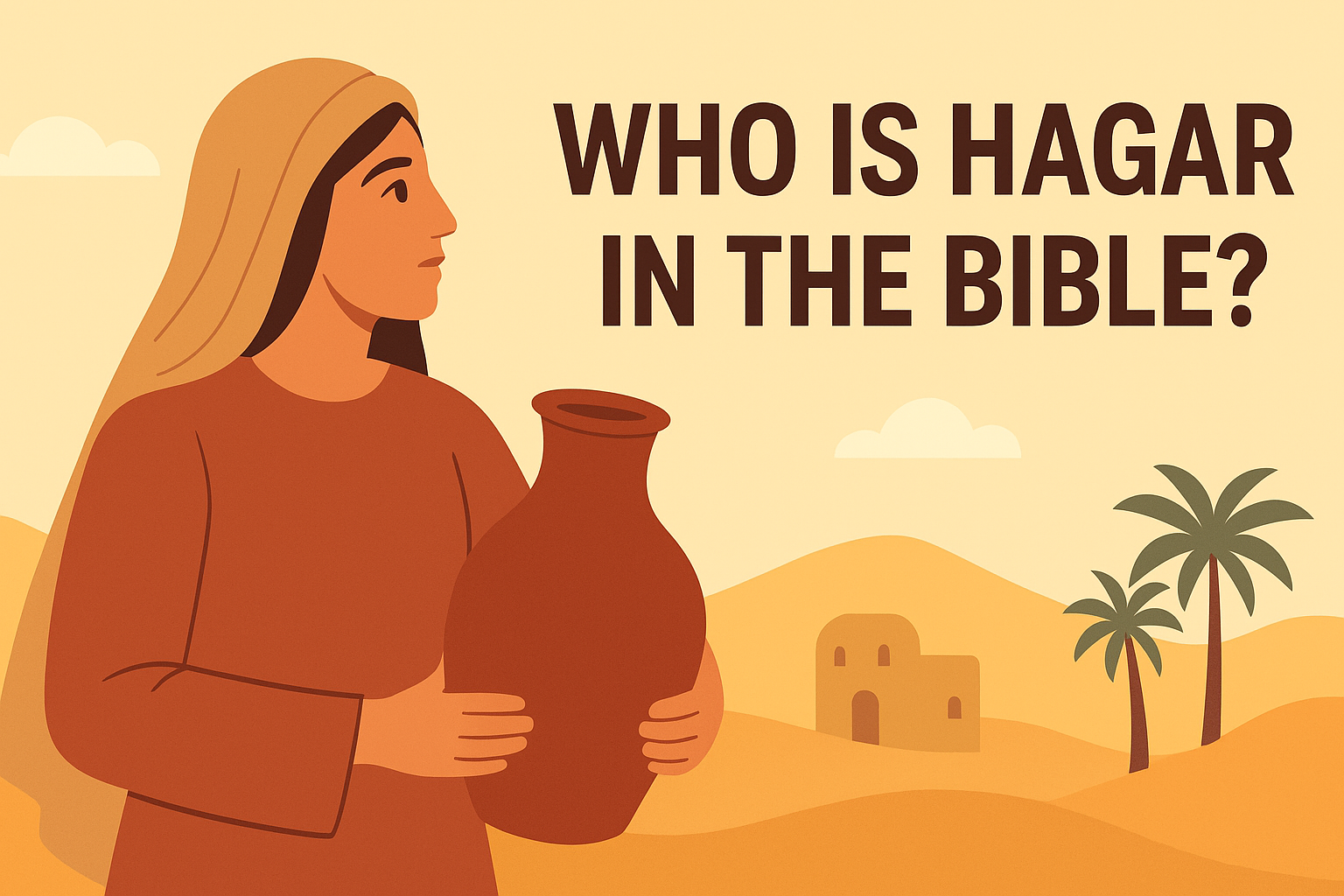
Hagar is a significant figure in the Bible, known primarily for her role in the story of Abraham, Sarah, and the birth of Ishmael. She was an Egyptian slave woman who became a concubine to Abraham when Sarah, unable to conceive, offered Hagar to him as a means to fulfill God’s promise of numerous descendants.
Hagar’s story unfolds mainly in the Book of Genesis, illustrating themes of faith, struggle, and God’s providence. Her experiences highlight the complexities of human relationships and the impact of societal norms on individuals, particularly women in ancient times.
Hagar’s Background and Role
Hagar’s introduction in the biblical narrative occurs in Genesis 16. Sarah, originally named Sarai, was Abraham’s wife, but after years of infertility, she grew impatient with God’s promise of a child. In her desperation, she suggested that Abraham marry Hagar to bear a child on her behalf. This was a common practice in ancient cultures, where a servant could bear children for a barren wife.
When Hagar became pregnant, tension arose between her and Sarah. The relationship soured as Hagar began to look down on Sarah, which led to Sarah mistreating her. Hagar’s plight reflects the struggles faced by women in a patriarchal society, where their worth was often tied to their ability to bear children.
The Encounter with the Angel of the Lord
In Genesis 16:7-14, Hagar encounters the Angel of the Lord while fleeing from Sarah’s harsh treatment. This moment is significant as it marks the first time a person in the Bible receives a direct message from God while in a state of distress. The angel tells Hagar to return to Sarah and submit to her, promising that her descendants will be too numerous to count.
“The angel also said, ‘You are now pregnant and will give birth to a son. You shall name him Ishmael, for the Lord has heard of your misery.’” (Genesis 16:11, NLT)
This encounter emphasizes God’s awareness of Hagar’s suffering and His desire to provide for her and her child. Hagar’s response is profound; she calls God “El Roi,” meaning “the God who sees me,” acknowledging His compassion and care in her time of need.
The Birth of Ishmael
Following her return, Hagar gave birth to a son named Ishmael, as God had instructed. Ishmael’s name means “God hears,” reflecting the divine promise made to Hagar. Ishmael is considered the ancestor of several Arab nations and is significant in Islamic tradition as well.
The birth of Ishmael, however, did not resolve the tensions between Hagar and Sarah. After many years, God fulfilled His promise to Abraham and Sarah by allowing Sarah to conceive and give birth to Isaac, as recorded in Genesis 21. This led to further conflict, as Sarah demanded that Abraham send Hagar and Ishmael away to ensure Isaac would inherit the family legacy.
Hagar’s Expulsion and God’s Provision
In Genesis 21:8-21, Abraham reluctantly obeys Sarah’s request and sends Hagar and Ishmael away. This moment is heart-wrenching, as Hagar finds herself in the wilderness with her son, facing dire circumstances. She runs out of water and believes they will die from thirst.
In this desperate moment, God once again intervenes. An angel calls to Hagar from heaven, reassuring her and showing her a well of water. This act of divine provision underscores the theme of God’s faithfulness to those who are marginalized and in need.
“Then God opened Hagar’s eyes, and she saw a well of water. She quickly filled her water container and gave the boy a drink.” (Genesis 21:19, NLT)
The Legacy of Hagar
Hagar’s legacy is multifaceted. She is often viewed as a symbol of the oppressed and marginalized, illustrating that God sees and cares for those who suffer. Her story also highlights the consequences of human decisions, particularly the complexities that arise from attempting to take control of God’s promises.
In Christian theology, Hagar is sometimes seen as a figure representing the Old Covenant, while Sarah and Isaac represent the New Covenant. This interpretation is notably discussed in Galatians 4:21-31, where Paul contrasts the two women and their sons to illustrate the difference between living under the law and living under grace.
Despite the challenges and injustices she faced, Hagar’s story is ultimately one of redemption and hope. She is recognized as a woman of faith who encountered God in her darkest moments and received His promises for her and her son.
The Significance of Hagar in the Biblical Narrative
Hagar’s story serves as a profound exploration of themes such as faith, identity, and divine intervention. Her journey illustrates the struggles of those who are often overlooked in society. In many ways, Hagar represents the marginalized, and her experiences reflect broader themes of social justice that resonate throughout Scripture.
Her identity as an Egyptian slave adds layers to her narrative. In ancient times, the Egyptians were often seen as outsiders or enemies of Israel. Hagar’s status as a foreigner and a servant underscores the complexities of her position. Despite her lowly status, she becomes a pivotal character in God’s unfolding plan for humanity, demonstrating that God’s love and promises extend beyond cultural and societal boundaries.
Hagar’s Faith and Resilience
Throughout her trials, Hagar exhibits remarkable resilience. After being mistreated by Sarah, she does not simply resign to her fate. Instead, she takes the courageous step of fleeing to the wilderness, seeking a better life for herself and her unborn child. This act of defiance is significant, as it shows her desire for autonomy and recognition.
When Hagar encounters the Angel of the Lord, her faith is evident in her willingness to return to Sarah despite the mistreatment. The promise that she would have countless descendants instills hope in her heart, and she responds by naming God “El Roi,” the God who sees her. This moment highlights the transformative power of divine encounters and how they can inspire individuals to rise above their circumstances.
Hagar and the Role of Women in Scripture
Hagar’s story also invites reflection on the role of women in biblical narratives. In a patriarchal society, women’s voices were often marginalized. Hagar’s experiences shed light on the struggles many women faced during biblical times, particularly those who were unable to bear children. Her journey is a testament to the agency that women can exercise, even in oppressive circumstances.
Moreover, Hagar’s relationship with Sarah presents an opportunity to discuss the dynamics of jealousy and competition among women. Sarah’s initial suggestion for Hagar to bear a child reflects societal norms, but the ensuing conflict reveals the emotional toll of such decisions on all parties involved. Hagar’s story challenges readers to consider how their actions impact others, particularly in relationships characterized by power imbalances.
Hagar’s Impact on Later Biblical Themes
Hagar’s role in the biblical narrative extends beyond her immediate story. Her life and experiences resonate with later themes of exile and redemption found throughout Scripture. Many scholars draw parallels between Hagar and other biblical figures who experience hardship yet ultimately find hope and restoration.
For instance, the theme of God providing for the marginalized appears repeatedly in the Bible. Just as God provided for Hagar and Ishmael in the wilderness, He is depicted as a protector and provider for others in distress. This motif culminates in the New Testament, where Jesus reaches out to those marginalized by society, offering them love and inclusion.
Hagar in Christian Theology and Interpretation
Hagar’s story has been interpreted in various ways within Christian theology. Some view her as a foreshadowing of the inclusion of Gentiles into the family of God, signifying that God’s grace is available to all, regardless of their background. This interpretation emphasizes God’s desire for all people to be part of His redemptive plan.
Additionally, the contrast between Hagar and Sarah in Galatians 4 serves to highlight the difference between living under the law and living under grace. Paul’s use of Hagar as a symbol of the Old Covenant invites believers to reflect on the freedom found in Christ, reminding them that God’s promises are fulfilled through faith rather than human effort.
Questions for Reflection and Discussion
As we consider Hagar’s story, several questions arise that can deepen our understanding and application of her narrative:
- What does Hagar’s experience teach us about the nature of God’s compassion and provision in times of distress?
- How can we better support those who find themselves in marginalized positions in our communities today?
- In what ways can we learn from Hagar’s resilience and faith when faced with our own challenges?
- How do the themes of jealousy and competition among women in Hagar’s story resonate with contemporary issues of women’s relationships?
- What does Hagar’s story reveal about the importance of including diverse voices and perspectives in our understanding of God’s work in the world?
Conclusion: Hagar’s Enduring Legacy
Hagar’s legacy is one of strength, faith, and hope. Her story challenges us to recognize the dignity and worth of all individuals, regardless of their circumstances. Through her experiences, we are reminded of God’s unwavering presence and compassion for those who suffer. Hagar’s journey from oppression to divine encounter illustrates the transformative power of faith and the promise of redemption that is available to everyone.
As we reflect on Hagar’s narrative, let us strive to emulate her resilience and faith in our own lives and relationships. By doing so, we honor her story and acknowledge the profound impact that one woman’s journey can have on our understanding of God’s love and grace.