
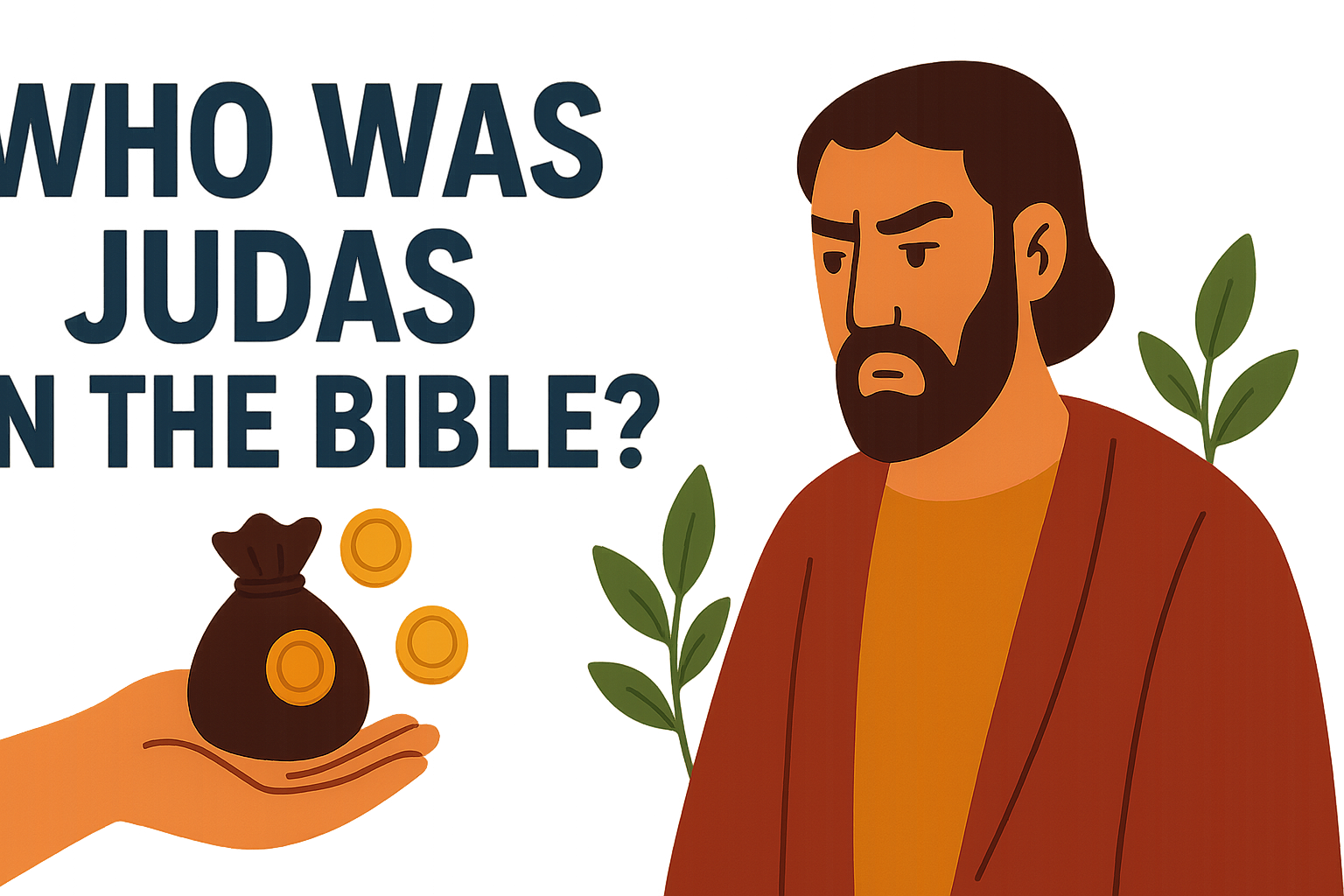
Judas Iscariot is one of the most infamous figures in the New Testament of the Bible. He was one of the twelve disciples chosen by Jesus Christ to follow Him during His ministry. Judas is primarily known for betraying Jesus, leading to His arrest and crucifixion. This act of betrayal has made Judas a symbol of treachery throughout history.
Despite his notorious reputation, understanding Judas’s role in the Bible requires examining the context of his actions and the significance of his character within the Gospel narratives. His story raises questions about loyalty, free will, and the nature of sin.
Judas’s Background and Role as a Disciple
Judas Iscariot was one of the twelve disciples selected by Jesus to be part of His inner circle. The Gospels list the names of the twelve disciples, and Judas is consistently mentioned among them (Matthew 10:2-4; Mark 3:16-19; Luke 6:12-16). His surname, Iscariot, is believed to indicate that he was from the town of Kerioth in Judea.
As a disciple, Judas witnessed many of Jesus’s miracles, teachings, and acts of compassion. He traveled with Jesus and the other disciples, sharing in their experiences and participating in their ministry. However, the Gospels also highlight some troubling aspects of Judas’s character. For instance, he served as the treasurer for the group, and John’s Gospel notes that he was known to steal from the money bag (John 12:6).
The Betrayal of Jesus
The most significant event associated with Judas Iscariot is his betrayal of Jesus. This act is foretold in the Old Testament and is a pivotal moment in the New Testament narrative. In the Gospels, Judas agrees to betray Jesus for thirty pieces of silver (Matthew 26:14-16). This payment fulfills the prophecy found in Zechariah 11:12-13.
On the night of the Last Supper, Jesus reveals that one of His disciples would betray Him. The disciples are shocked and begin to question who it could be. Jesus indicates that it is the one who dips bread in the bowl with Him (Matthew 26:21-25). This moment illustrates the close relationship Judas had with Jesus, as he was part of the intimate gathering of disciples.
Judas’s Actions Leading to the Arrest of Jesus
After the Last Supper, Judas leads a group of soldiers and religious leaders to the Garden of Gethsemane, where Jesus is praying. He identifies Jesus by giving Him a kiss, a sign of affection that marks the moment of betrayal (Matthew 26:47-50; Mark 14:43-46; Luke 22:47-48). This act of betrayal is not only a personal betrayal but also a fulfillment of Jesus’s prophetic words about His impending suffering and death.
The arrest of Jesus leads to a series of events that culminate in His crucifixion. Judas’s role in this betrayal has been interpreted in various ways. Some see him as a necessary instrument in the divine plan for salvation, while others view him as a tragic figure who succumbed to greed and despair.
The Aftermath of the Betrayal
Following the betrayal, Judas experiences deep remorse for his actions. The Gospel of Matthew recounts that he returns the thirty pieces of silver to the chief priests and elders, confessing, “I have sinned by betraying innocent blood” (Matthew 27:3-4). However, rather than seeking forgiveness, he ultimately takes his own life by hanging himself (Matthew 27:5). This tragic end raises questions about guilt, repentance, and the nature of sin.
“For the wages of sin is death, but the gift of God is eternal life in Christ Jesus our Lord.” (Romans 6:23)
Theological Implications of Judas’s Betrayal
Judas’s betrayal has profound theological implications. It raises questions about predestination, free will, and the nature of God’s plan. Some theologians argue that Judas’s actions were predetermined as part of God’s redemptive plan for humanity, while others emphasize his personal choice to betray Jesus, highlighting the importance of free will.
The story of Judas also serves as a cautionary tale about the dangers of greed and disloyalty. His actions remind believers of the consequences of turning away from faith and the potential for even the closest followers of Jesus to falter. In this sense, Judas Iscariot remains a complex figure in Christian thought, embodying both the capacity for betrayal and the need for redemption.
Throughout history, Judas has often been portrayed as the ultimate villain. However, understanding his story in the context of Jesus’s teachings can lead to deeper insights about forgiveness, grace, and the human condition. The narrative of Judas Iscariot continues to resonate today, inviting reflection on loyalty, faith, and the choices we make in our own lives.
Judas’s Legacy and Representation in Art and Literature
The figure of Judas Iscariot has transcended the pages of the Bible, leaving a significant mark on art, literature, and popular culture. His story has been interpreted and reinterpreted through various lenses, often reflecting societal views on betrayal, guilt, and redemption. Artists from different eras have depicted Judas in various ways, ranging from a villainous traitor to a tragic figure caught in a web of fate.
One of the most famous artistic representations is in Leonardo da Vinci’s “The Last Supper,” where Judas is depicted as a shadowy figure, setting him apart from the other disciples. This visual separation emphasizes his role as the betrayer and underscores the gravity of his actions. In contrast, some modern interpretations aim to explore his motivations, presenting Judas as a complex character rather than a one-dimensional villain.
In literature, Judas has inspired numerous works that delve into themes of betrayal and redemption. For instance, in the 20th century, playwrights and authors have explored his internal struggles and the psychological ramifications of his choices. These interpretations often invite audiences to grapple with the moral implications of Judas’s actions and to consider the broader themes of forgiveness and grace.
Judas in the Context of Jewish History
Understanding Judas also requires a look at the historical and cultural context of first-century Judea. The Jewish society during this time was under Roman occupation, leading to political tension and unrest. Many Jews were looking for a Messiah who would liberate them from Roman rule, and this expectation may have influenced Judas’s actions.
Some scholars suggest that Judas’s betrayal could have been motivated by a desire to force Jesus’s hand, pushing Him toward a more revolutionary role. This perspective posits that Judas may have believed that by betraying Jesus, he could instigate the very events that would lead to the establishment of God’s kingdom on Earth. This interpretation adds a layer of complexity to Judas’s character, suggesting that his actions may have stemmed from misguided zeal rather than pure greed.
Different Perspectives on Judas’s Role
Throughout Christian history, interpretations of Judas’s role have varied significantly. Early church fathers often viewed him as the epitome of betrayal, while some later theologians began to explore the idea of Judas as a tragic figure, caught in a divine plan beyond his understanding. This duality reflects the broader theological debates surrounding free will and divine sovereignty.
In recent years, there has been a resurgence of interest in Judas within scholarly circles. The discovery of the Gospel of Judas, a Gnostic text that presents a radically different view of his character, has further complicated the traditional narrative. In this text, Judas is portrayed not as a villain but as a key figure who understands Jesus’s true message and helps fulfill a divine purpose. This perspective challenges long-held assumptions and invites deeper reflection on the nature of faith and betrayal.
The Impact of Judas on Christian Thought
The narrative of Judas Iscariot continues to provoke thought and discussion among theologians and believers alike. His story serves as a reminder of the complexities of human nature, the potential for both good and evil within each person, and the profound implications of our choices. Judas’s actions highlight the importance of accountability and the need for redemption, underscoring that even those closest to Christ are susceptible to temptation and moral failure.
Moreover, the story of Judas invites believers to examine their own lives and relationships. Questions arise about loyalty, trust, and the consequences of betrayal in personal and communal contexts. How do we respond to those who have wronged us? Are we willing to extend forgiveness, as Jesus did, even in the face of deep hurt? These reflections can lead to a richer understanding of grace and the call to love one’s enemies.
Conclusion: The Complexity of Judas Iscariot
Judas Iscariot remains one of the most complex figures in the Bible. His actions and their ramifications have sparked countless discussions about morality, redemption, and the human condition. By examining Judas’s life and choices, we gain insight into the nature of betrayal and the profound need for forgiveness in our own lives. His legacy serves as a cautionary tale, reminding us of the fragility of faith and the importance of remaining steadfast in our commitment to Christ.
Ultimately, the story of Judas Iscariot challenges us to confront our own shortcomings and to embrace the possibility of redemption for ourselves and others. In grappling with his narrative, we are invited to explore the depths of grace, the weight of our choices, and the boundless love that God offers to all, even those who falter.
For further exploration of the themes surrounding Judas Iscariot, you may find valuable insights in the articles on the nature of betrayal in the Bible and the concept of redemption in Christian theology.