
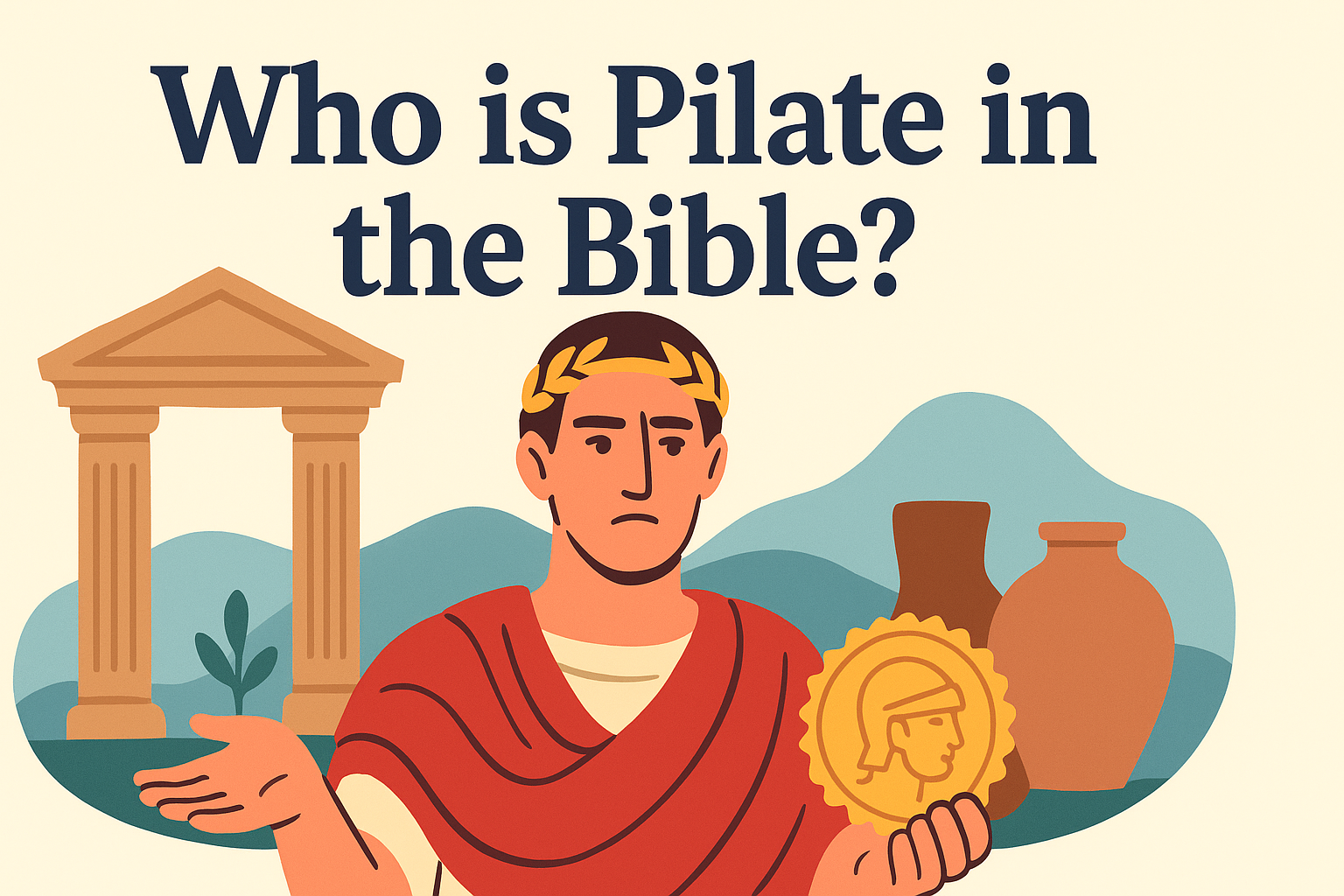
Pilate, known fully as Pontius Pilate, is a significant figure in the New Testament of the Bible. He served as the Roman governor of Judea during the time of Jesus Christ’s ministry, trial, and crucifixion. Pilate is most famously remembered for his role in the trial of Jesus, where he ultimately authorized His execution. His actions and decisions have been the subject of much discussion and interpretation throughout Christian history.
In the Gospels, Pilate is depicted as a somewhat reluctant participant in the events leading to the crucifixion of Jesus. He is portrayed as a political figure caught between the demands of the Jewish leaders who sought Jesus’ death and his own understanding of justice and authority.
Pilate’s Role in the Gospels
Pilate appears prominently in all four Gospels: Matthew, Mark, Luke, and John. Each account provides insights into his character and the dynamics of the trial of Jesus. In the Gospel of Matthew, for instance, Pilate is described as attempting to distance himself from the decision to crucify Jesus by washing his hands, declaring, “I am innocent of this man’s blood” (Matthew 27:24, NLT). This act symbolizes his desire to avoid moral responsibility for Jesus’ death.
In Mark’s Gospel, Pilate is portrayed as being surprised at Jesus’ silence during questioning. He asks, “Are you the King of the Jews?” and seems to struggle with the accusations brought against Jesus (Mark 15:2, NLT). This portrayal emphasizes Pilate’s confusion and his internal conflict regarding the charges against Jesus.
Pilate’s Interaction with the Jewish Leaders
The relationship between Pilate and the Jewish religious leaders is crucial to understanding his role. The Gospels reveal that the chief priests and elders were determined to see Jesus condemned. They brought Jesus to Pilate, accusing Him of blasphemy and claiming that He was a threat to Roman authority (Matthew 26:63-66). Pilate, who represented Roman law, was reluctant to execute an innocent man but ultimately yielded to the pressure of the crowd and the leaders.
As the trial unfolded, Pilate attempted to negotiate a way out of the situation. In Luke 23:6-12, he discovers that Jesus is a Galilean and sends Him to Herod, hoping that Herod would take responsibility for the case. However, Herod sends Jesus back to Pilate, further complicating the matter.
Pilate’s Decision and Its Implications
Pilate’s ultimate decision to condemn Jesus to crucifixion is a pivotal moment in the New Testament narrative. Despite finding no guilt in Jesus (Luke 23:4, NLT), he succumbs to the demands of the crowd. In John 19:12-16, Pilate’s struggle is evident as he seeks to release Jesus but ultimately gives in to the mob’s cries for crucifixion. His statement, “Shall I crucify your King?” reflects his incredulity at the insistence of the people (John 19:15, NLT).
This decision has had profound theological implications throughout Christian history. It raises questions about authority, justice, and the nature of sacrifice. Pilate stands as a figure representing human weakness in the face of political pressure and moral ambiguity. His actions demonstrate how fear and desire for approval can lead to grave injustices.
The Symbolism of Pilate’s Hand Washing
Pilate’s act of washing his hands has become a powerful symbol of moral evasion. In Matthew 27:24, he declares his innocence, but the act does not absolve him from the responsibility of his decision. This moment has been interpreted in various ways, often highlighting the theme of complicity in wrongdoing. Pilate’s attempt to wash away his guilt serves as a reminder that one cannot simply distance oneself from the consequences of their actions.
Pilate’s Legacy in Christian Thought
Pilate’s legacy extends beyond the biblical narrative into Christian theology and tradition. He is often viewed as a complex character, embodying the struggles of authority figures faced with moral dilemmas. Throughout history, theologians and scholars have debated the extent of his culpability in the death of Jesus. Some view him as a tragic figure, caught in a web of political intrigue, while others see him as a symbol of cowardice and moral failure.
The Apostles’ Creed, a statement of Christian faith developed in the early church, includes the phrase “suffered under Pontius Pilate.” This acknowledgment highlights the historical significance of Pilate’s role in the passion of Christ and serves to affirm the reality of Jesus’ suffering and crucifixion.
Historical Context of Pilate
From a historical perspective, Pontius Pilate served as the Roman governor of Judea from approximately A.D. 26 to A.D. 36. His governance was marked by tension between the Roman authorities and the Jewish population. Historical accounts outside of the Bible, such as those by the Jewish historian Josephus and the Roman historian Tacitus, provide additional context about Pilate’s rule and the sociopolitical climate of the time.
Josephus describes Pilate as a harsh ruler whose actions often incited unrest among the Jewish people. His governance was marked by a lack of sensitivity to Jewish customs, which contributed to his unpopularity. This historical backdrop helps explain why Pilate may have been particularly wary of the Jewish leaders and the potential for unrest during the trial of Jesus.
In summary, Pilate remains a key figure in the narrative of Jesus’ crucifixion, embodying the complexities of human authority, moral choice, and the consequences of political expediency. His portrayal in the Gospels serves to illustrate the struggle between justice and the pressures of societal expectations.
Pilate’s Character and Psychological Complexity
Pilate’s character can be analyzed through the lens of psychological complexity, revealing the inner turmoil he faced during the trial of Jesus. He is often depicted as a man torn between his duty as a Roman governor and his moral compass. The Gospels suggest that Pilate recognized Jesus’s innocence, yet he felt trapped by the political landscape and the expectations of the Jewish leaders and the crowd. This conflict highlights the human tendency to prioritize social acceptance over ethical convictions.
In John 19:8-9, Pilate expresses fear when he hears that Jesus claimed to be the Son of God. His reaction indicates a deeper apprehension, possibly about the ramifications of condemning an innocent man who may indeed be who He claims to be. This moment illustrates Pilate’s struggle with his own beliefs and the weight of the responsibility he carries as a judge. It raises questions about the nature of authority and the moral dilemmas faced by those in power.
The Role of Public Pressure
The public’s influence on Pilate’s judgment cannot be overstated. The Gospels depict a volatile scene where the crowd clamors for Jesus’ crucifixion, leading Pilate to question, “What crime has this man committed?” (Luke 23:22). This moment reflects the pressure he faced from the populace, demonstrating how public opinion can sway even those in positions of authority. Pilate’s eventual capitulation to the crowd’s demands serves as a cautionary tale about the dangers of yielding to mob mentality.
This aspect of Pilate’s story prompts reflection on contemporary issues of justice and moral courage. How often do individuals in positions of authority face similar pressures? What can be learned from Pilate’s failure to stand firm in the face of overwhelming opposition? These questions resonate with both historical and modern audiences, inviting deeper contemplation on the responsibilities of leaders.
Pilate in Historical Accounts
Beyond biblical texts, Pilate is referenced in various historical accounts, contributing to a more nuanced understanding of his role. The historian Tacitus mentions Pilate in the context of the execution of Jesus, affirming his historical existence and involvement in the events surrounding the crucifixion. Josephus, too, provides insights into Pilate’s governance, portraying him as a figure whose harsh policies alienated the Jewish population. This historical context enriches the narrative found in the Gospels, offering a glimpse into the complexities of Roman rule in Judea.
These accounts highlight the fraught relationship between the Roman authorities and the Jewish populace during Pilate’s tenure. The political unrest and cultural tensions of the time likely influenced Pilate’s actions and decisions during the trial of Jesus. Understanding this context helps explain why he may have been more concerned about maintaining order than pursuing justice, further complicating his legacy.
Pilate’s Fate and Later Interpretations
After the events of the crucifixion, historical records about Pilate become sparse. Some traditions suggest that he faced a tragic end, with later legends claiming he died by suicide or was exiled. These narratives often reflect the moral consequences of his actions, serving as a cautionary tale about the dangers of failing to uphold justice.
In Christian thought, Pilate has been interpreted in various ways over the centuries. Some view him as a tragic figure, while others see him as a symbol of moral cowardice. The diverse interpretations of Pilate’s character reflect broader themes within Christian theology, such as the nature of sin, redemption, and the human condition. His story invites believers to examine their own moral choices and the consequences of their actions.
Questions for Reflection
Pilate’s story raises several poignant questions for reflection and discussion among Christians and those exploring the biblical narrative. Consider the following:
- What does Pilate’s struggle reveal about the nature of authority and the responsibilities that come with it?
- How can we apply Pilate’s experience to our own lives when faced with moral dilemmas?
- In what ways does public opinion shape our decisions, and how can we remain true to our convictions despite external pressures?
- How does Pilate’s legacy challenge us to think about justice, mercy, and the consequences of our choices?
These questions encourage deeper engagement with the text and its implications for personal faith and ethical living. They invite individuals to explore how the lessons from Pilate’s life can be applied to contemporary issues and personal circumstances.
Conclusion: The Enduring Impact of Pilate
Pontius Pilate remains a significant figure in the biblical narrative, embodying the complexities of human authority, moral choice, and the impact of societal pressures. His role in the trial and crucifixion of Jesus serves as a profound reminder of the challenges leaders face when confronted with ethical dilemmas. Pilate’s legacy continues to provoke thought and discussion within Christian contexts, encouraging believers to reflect on their own responsibilities in the pursuit of justice and truth.
As we consider Pilate’s actions and their implications, we are prompted to engage with the themes of accountability and moral courage in our own lives. His story challenges us to examine the motivations behind our decisions and to strive for integrity, even in the face of adversity.
For further exploration of biblical figures and their significance, you may find the articles on the role of authority in the Bible and the historical context of Jesus’ crucifixion insightful. These resources provide a deeper understanding of the complexities surrounding Pilate and the impact of his actions on the Christian faith.