
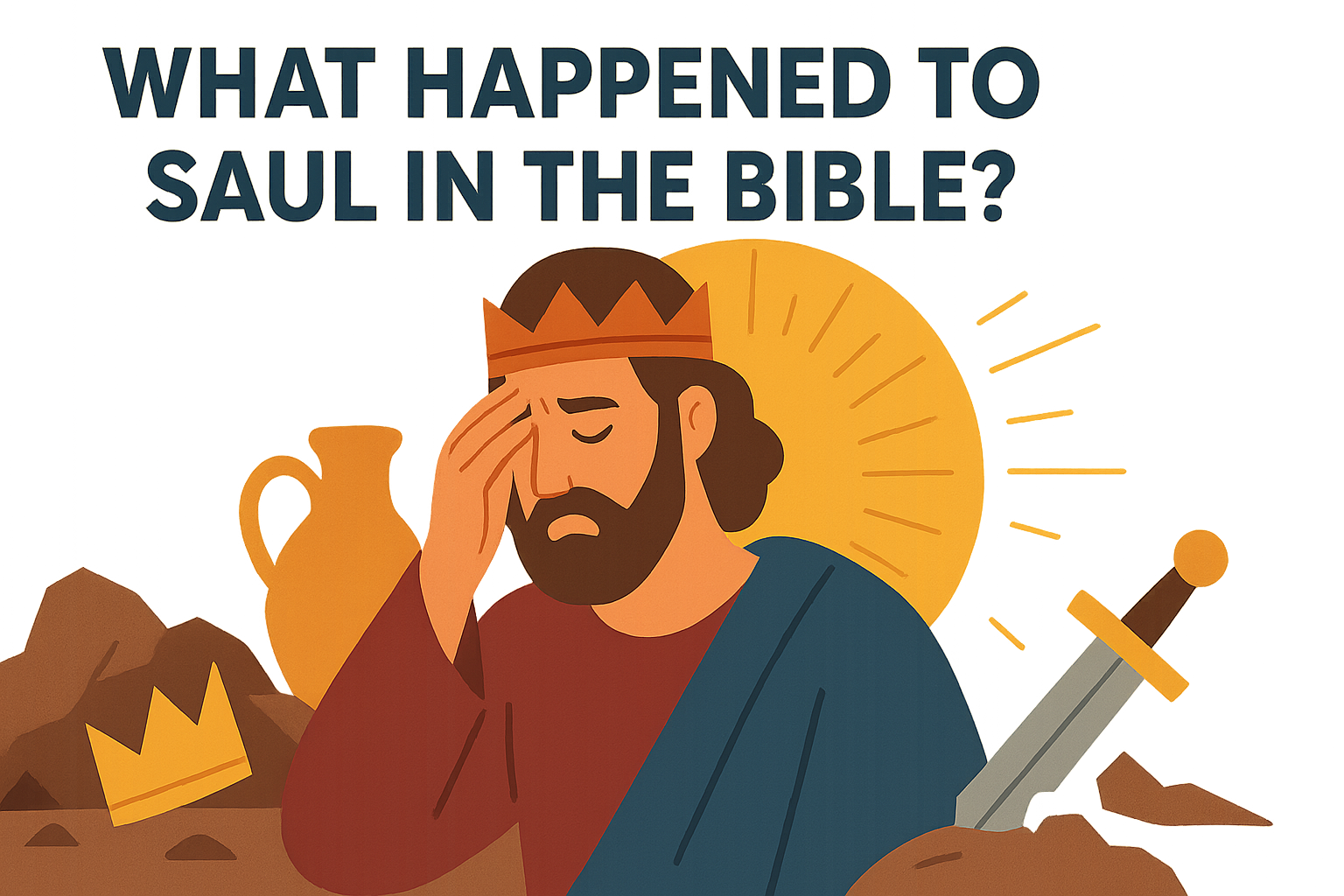
In the Bible, Saul was the first king of Israel, chosen by God to lead His people. His story is primarily told in the books of 1 Samuel and 2 Samuel. Saul’s reign began with promise and potential, but it ultimately ended in tragedy due to his disobedience to God and a series of personal failures.
Initially, Saul was a humble man from the tribe of Benjamin, and he was anointed king by the prophet Samuel. However, as time passed, Saul struggled with insecurity, jealousy, and pride, leading to his downfall. His relationship with God deteriorated as he repeatedly disobeyed divine commands, resulting in God rejecting him as king.
Saul’s Anointing as King
Saul’s journey began when the Israelites demanded a king to lead them, desiring to be like other nations. God instructed the prophet Samuel to anoint Saul, which he did in a private ceremony (1 Samuel 10:1). Saul was initially humble, hiding among the supplies when he was publicly presented as king (1 Samuel 10:22). This moment marked the beginning of Saul’s reign, during which he achieved early successes in battle against the Ammonites, gaining the support of the people.
Early Successes and Challenges
Saul’s reign started with significant victories, but challenges soon arose. One notable event was his conflict with the Philistines. In 1 Samuel 13, Saul faced a critical test when he was waiting for Samuel to arrive before making a sacrifice. Impatient and fearful of losing his troops, Saul took matters into his own hands and offered the sacrifice himself. This act of disobedience marked the beginning of his decline, as Samuel informed Saul that God had rejected him as king (1 Samuel 13:13-14).
Saul’s Growing Jealousy
As Saul’s reign continued, his jealousy began to overshadow his leadership. The rise of David, a young warrior who defeated Goliath, stirred feelings of insecurity in Saul. The people praised David, singing, “Saul has killed his thousands, and David his tens of thousands” (1 Samuel 18:7). This comparison ignited a fierce jealousy in Saul, leading him to view David as a threat to his throne.
Attempts to Kill David
In his jealousy, Saul made several attempts to kill David. He threw a spear at him on multiple occasions (1 Samuel 18:10-11). David, however, managed to escape each time. Despite being a loyal servant, David found himself on the run, forced to live in hiding. Saul’s relentless pursuit of David is a tragic element of his story, showcasing his inability to accept God’s plan and his growing paranoia.
David’s Mercy and Saul’s Downfall
Interestingly, while Saul sought to kill David, David had opportunities to take revenge but chose mercy instead. In 1 Samuel 24, David encountered Saul in a cave and chose not to harm him, even cutting a piece of Saul’s robe to prove he could have killed him. When Saul realized what David had done, he acknowledged David’s righteousness and momentarily repented (1 Samuel 24:16-21). However, this change of heart was short-lived, as Saul returned to his obsessive pursuit of David.
Saul’s Final Days
As Saul’s reign progressed, he became increasingly tormented. He was plagued by an evil spirit sent by God, which caused him great distress. In an attempt to find peace, he sought the help of a medium in Endor to summon the spirit of the deceased prophet Samuel (1 Samuel 28). This act of consulting a medium was against God’s laws and further demonstrated Saul’s desperation and disconnection from God.
The Prophecy of His Death
During this encounter, Samuel appeared and delivered a grim message: God had turned away from Saul, and he would soon die in battle. The following day, Saul faced the Philistines in battle on Mount Gilboa. Despite his attempts to rally his troops, the Israelite army was defeated, and Saul’s sons, including Jonathan, were killed (1 Samuel 31:1-2).
Saul’s Death
In the thick of battle and facing imminent capture, Saul chose to take his own life. He fell on his sword, committing suicide to avoid the humiliation of being captured by the Philistines (1 Samuel 31:4). This tragic end exemplifies the consequences of Saul’s disobedience and rejection of God throughout his reign.
“So Saul took his own sword and fell on it.” (1 Samuel 31:4)
The Aftermath
After Saul’s death, the news of his demise brought mourning throughout Israel. His body was displayed by the Philistines, and it was later retrieved and given a proper burial by the men of Jabesh Gilead (1 Samuel 31:11-13). Saul’s life serves as a cautionary tale about pride, disobedience, and the consequences of turning away from God.
Saul’s story is a complex narrative that reflects the challenges of leadership, the struggle with jealousy and insecurity, and the importance of obedience to God. His legacy is marked by both his initial promise as Israel’s first king and his tragic downfall due to his choices and actions.
The Significance of Saul’s Reign
Saul’s reign as the first king of Israel holds substantial significance in biblical history. His appointment marked a pivotal transition for the Israelite people from a theocracy, where God was their direct leader, to a monarchy. This shift was driven by the people’s desire to be like other nations, reflecting a lack of faith in God’s provision. Saul’s kingship set a precedent for future rulers, illustrating the complexities and challenges of leading God’s chosen people.
God’s Sovereignty and Human Choices
Throughout Saul’s story, a central theme emerges: the tension between divine sovereignty and human choices. While God chose Saul and equipped him for leadership, Saul’s repeated disobedience showcased the consequences of free will. His choices ultimately led to his rejection by God, emphasizing that even those chosen by the Lord are not exempt from accountability. This raises important questions for believers today: How do our choices align with God’s will? Are we mindful of the consequences of our actions?
Saul’s Relationship with God
Saul’s relationship with God deteriorated over time, reflecting a broader lesson about the importance of maintaining a close connection with the Lord. Initially, Saul received the Spirit of God, empowering him for leadership. However, as he disobeyed God’s commands, the Spirit departed from him, leaving him vulnerable to torment and despair (1 Samuel 16:14). This illustrates how disobedience can lead to spiritual isolation and a loss of divine guidance.
The Role of Samuel
The prophet Samuel played a crucial role in Saul’s life, acting as a spiritual advisor and intermediary between God and Saul. Their relationship was marked by moments of both guidance and confrontation. Samuel’s warnings about Saul’s disobedience serve as reminders of the importance of listening to godly counsel. When Samuel told Saul that God had rejected him, it was a pivotal moment that highlighted the seriousness of Saul’s actions (1 Samuel 15:26). This relationship emphasizes the need for accountability and wise counsel in our own lives.
Lessons from Saul’s Downfall
Saul’s life offers several important lessons for Christians today. First, pride and jealousy can lead to destructive behavior. Saul’s inability to handle David’s rising fame illustrates how envy can cloud judgment and lead to harmful decisions. Instead of celebrating David’s success, Saul viewed him as a rival, which ultimately consumed him.
The Importance of Obedience
Saul’s repeated disobedience to God’s commands serves as a stark reminder of the importance of obedience in the life of a believer. God desires a heart that is willing to follow His will, even when it is difficult or counterintuitive. Saul’s downfall underscores the reality that disobedience can lead to severe consequences, not only for oneself but also for those around us.
Saul’s Legacy
Despite the tragic end of his reign, Saul’s legacy is multifaceted. He is remembered as a flawed leader who had moments of great potential but ultimately succumbed to his weaknesses. His story serves as a cautionary tale about the dangers of pride, insecurity, and disobedience. Yet, it also highlights God’s ongoing faithfulness to His people, as seen in His choice of David to succeed Saul and lead Israel toward a new era.
Reflections on Leadership
Saul’s story provides valuable insights into the nature of leadership. It emphasizes that effective leadership is not just about authority and power, but also about humility, obedience, and the ability to serve others. Leaders are called to seek God’s guidance and to act in ways that honor Him and uplift those they lead. Saul’s failure to do so ultimately led to his demise, reminding us that true leadership is rooted in a relationship with God.
Concluding Thoughts
Saul’s life and reign serve as a profound exploration of the complexities of human nature, leadership, and the importance of faithfulness to God. His tragic end is a reminder of the consequences of turning away from God’s path. As we reflect on Saul’s story, we are encouraged to examine our own lives and leadership roles, striving to remain obedient to God and to seek His guidance in all that we do. Ultimately, Saul’s story calls us to embrace humility, seek reconciliation when we stray, and trust in God’s plan for our lives.
For further exploration of biblical leadership and the significance of obedience, you can read about Saul’s life and its implications for modern believers and understand the importance of faithfulness in God’s calling.