
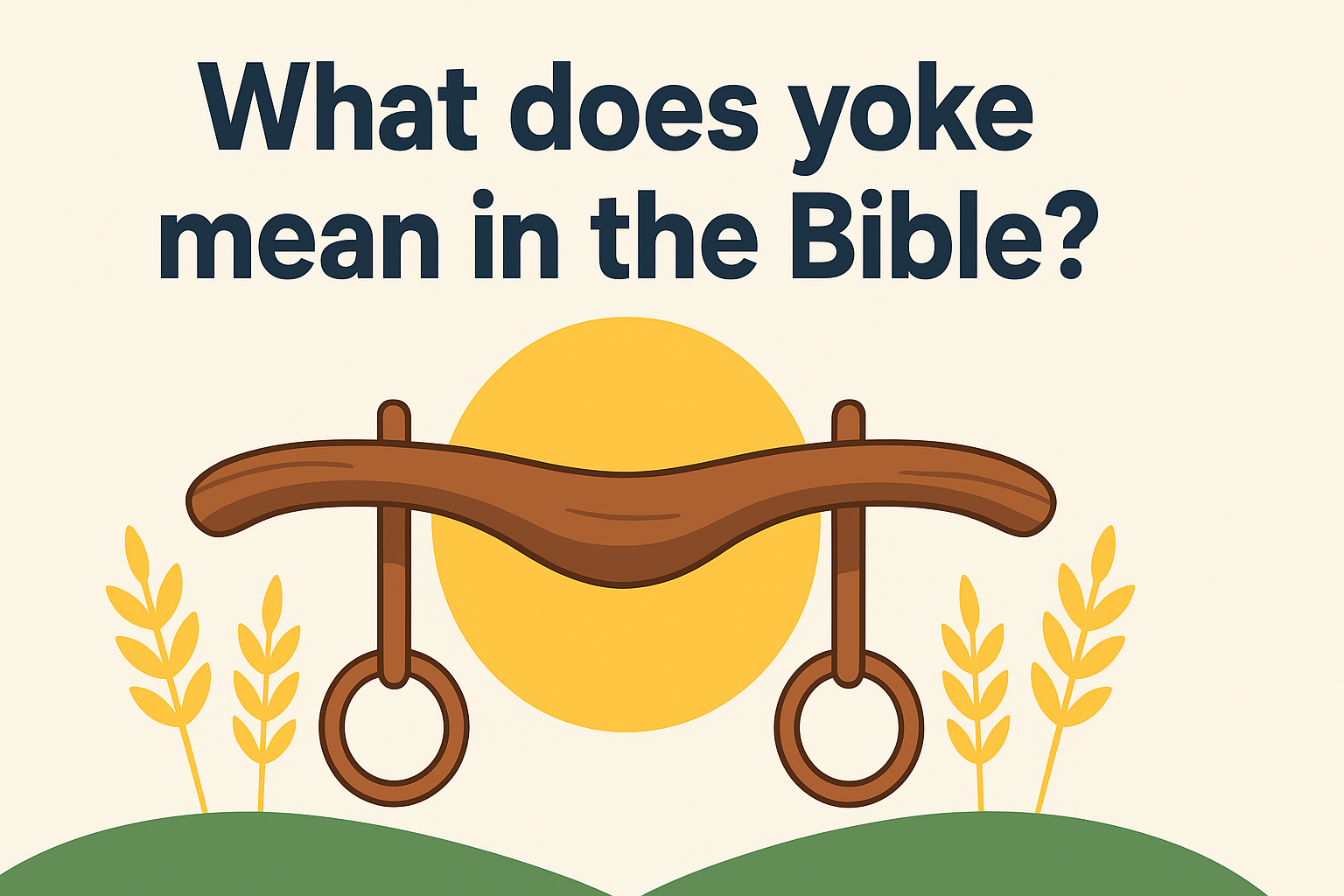
In the Bible, a “yoke” has both literal and metaphorical meanings. Literally, it refers to a wooden beam used to join two animals, typically oxen, so they can work together in pulling a plow or a cart. Metaphorically, it symbolizes servitude, burden, or authority, often representing the obligations and responsibilities one carries in life.
The concept of a yoke is used in various contexts throughout Scripture, illustrating the relationship between God and His people, as well as the burdens people bear in their daily lives. Understanding the yoke’s significance can provide deeper insight into spiritual teachings and personal faith.
Literal Meaning of Yoke in the Bible
The literal yoke is mentioned in several passages of the Bible, particularly in the Old Testament. It was primarily used in agricultural societies to harness the strength of oxen for plowing fields. The Book of Deuteronomy provides instructions regarding the yoke, emphasizing the importance of not yoking together different kinds of animals. In Deuteronomy 22:10, it states, “You must not plow with an ox and a donkey harnessed together.” This command not only served practical purposes but also highlighted the importance of harmony and unity in work.
In a broader sense, the yoke represents the idea of working together toward a common goal. Just as two animals must pull in the same direction, people are encouraged to work in unity, whether in families, communities, or within the church.
Metaphorical Meanings of Yoke
The metaphorical use of yoke appears prominently in the New Testament, particularly in the teachings of Jesus. In Matthew 11:28-30, Jesus invites those who are weary and burdened to come to Him, stating, “Take my yoke upon you and learn from me, for I am gentle and humble in heart, and you will find rest for your souls.” This invitation emphasizes the contrast between the heavy burdens imposed by religious legalism and the light burden that comes from a relationship with Christ.
Here, Jesus uses the yoke as a symbol of discipleship. By taking on His yoke, believers are called to align themselves with His teachings and example. This yoke is not meant to be a source of oppression but rather a means of guidance and support. It signifies a partnership with Christ, where He bears the weight of our struggles alongside us.
The Yoke of the Law vs. the Yoke of Christ
The concept of yoke is also used to contrast the burdensome nature of the Mosaic Law with the grace offered through faith in Jesus. The Apostle Paul addresses this in Galatians 5:1, where he urges believers to stand firm and not be burdened again by a yoke of slavery. Here, he refers to the legalistic requirements of the Law, which can be overwhelming and impossible to fulfill perfectly.
In contrast, the yoke of Christ is described as easy and light. This does not mean that following Christ is without challenges, but it suggests that His way provides freedom and peace that the Law cannot offer. The yoke of Christ invites believers into a relationship based on grace rather than a strict adherence to rules.
Yoke as a Symbol of Authority
In addition to representing servitude and burden, the yoke is also a symbol of authority. In ancient cultures, a yoke could signify the power one has over another. In Jeremiah 27:8, the prophet uses the imagery of a yoke to describe the subjugation of nations under Babylonian rule. This illustrates how a yoke can represent the control and influence one entity has over another.
In the context of faith, the yoke signifies the authority of God over His people. When believers take on the yoke of Christ, they acknowledge His lordship and submit to His guidance. This submission is not meant to be oppressive but rather an act of trust in His wisdom and care.
Spiritual Implications of the Yoke
The spiritual implications of the yoke encourage believers to examine the burdens they carry. Are they self-imposed or influenced by societal expectations? Jesus invites individuals to release their heavy burdens and exchange them for His yoke, which offers rest and renewal. This exchange is a core aspect of the Christian faith, emphasizing the importance of reliance on Christ rather than personal strength.
Moreover, the idea of being unequally yoked is addressed in 2 Corinthians 6:14, where Paul warns against forming close relationships with non-believers. This metaphorical use of yoke encourages believers to seek partnerships that align with their faith values, ensuring a harmonious relationship where both parties can support each other in their spiritual journeys.
In summary, the biblical concept of a yoke encompasses both a literal agricultural tool and a rich metaphor for spiritual life. It represents the burdens we bear, the authority we submit to, and the partnerships we form. By understanding the multifaceted meanings of the yoke, believers can gain valuable insight into their relationship with Christ and the nature of their spiritual walk.
The Yoke in the Old Testament
The Old Testament provides various insights into the concept of the yoke, often illustrating the relationship between God and His people. For example, in Leviticus 26:13, God declares, “I broke the bars of your yoke and enabled you to live in freedom.” This passage shows that a yoke can symbolize oppression and bondage, while God’s intervention brings liberation. The imagery of a yoke here serves as a reminder of how God desires to free His people from the burdens of sin and oppression.
Additionally, in the prophetic literature, the yoke is frequently mentioned in the context of judgment and restoration. For instance, in Isaiah 58:6, the prophet speaks of God’s desire for His people to break every yoke, indicating a call to social justice and compassion. This use of yoke reinforces the idea that God is concerned not only with personal spiritual conditions but also with the societal structures that may oppress individuals.
The Yoke of Oppression
The theme of the yoke as a symbol of oppression is also prominent in the writings of the prophets. In Lamentations 3:27-30, the author reflects on the suffering endured under the yoke of sin and the consequences of disobedience to God. The imagery here emphasizes that sin can lead to a heavy burden, one that weighs down the soul and leads to despair. It serves as a cautionary reminder of the importance of faithfulness to God’s commands.
Furthermore, the yoke can represent the burdens placed upon individuals by others. In Micah 6:8, the prophet calls for justice, mercy, and humility, highlighting that the yoke of oppression can come from societal expectations or unjust systems. This understanding prompts believers to consider how they might contribute to lifting the burdens of others, reflecting God’s heart for justice in the world.
Understanding the Yoke in Community
The concept of the yoke also extends to the communal aspect of faith. In Matthew 18:20, Jesus states, “For where two or three gather in my name, there am I with them.” This passage highlights the importance of fellowship among believers, as they can support one another in bearing their respective yokes. The community of faith is meant to be a place where burdens are shared, and encouragement is offered, echoing the idea of being equally yoked in spiritual partnership.
Moreover, the early church exemplified this principle in Acts 2:44-47, where believers shared everything in common. This communal aspect of faith helps to lighten individual burdens and fosters an environment of mutual support and love. The yoke, therefore, becomes a means of connecting believers to one another, encouraging them to walk alongside each other in their spiritual journeys.
Yoke as an Instrument of Growth
Another important aspect of the yoke is its role in spiritual growth and maturity. Just as a yoke guides and directs the animals in their work, God uses the yoke of Christ to shape believers into His likeness. In Romans 8:28, Paul reassures us that “in all things God works for the good of those who love him.” The challenges and burdens that come with following Christ can serve as instruments for growth, teaching believers reliance on God and deepening their faith.
In this light, the yoke can also symbolize the discipline that comes with being a disciple of Christ. Hebrews 12:11 states, “No discipline seems pleasant at the time, but painful. Later on, however, it produces a harvest of righteousness and peace for those who have been trained by it.” Embracing the yoke of Christ means accepting the learning process that comes with faith, which ultimately leads to spiritual maturity.
Questions for Reflection
As we explore the biblical meaning of the yoke, it is useful to reflect on several key questions:
- What burdens am I currently carrying, and how can I exchange them for the yoke of Christ?
- In what areas of my life do I feel unequally yoked, and how can I seek partnerships that align with my faith?
- How can I contribute to breaking the yokes of oppression in my community?
- What steps can I take to deepen my relationship with Christ and embrace His guidance in my life?
These questions can facilitate personal reflection and growth, encouraging believers to actively engage with the concept of the yoke in their spiritual journeys.
Conclusion: Embracing the Yoke of Christ
In conclusion, the concept of the yoke in the Bible is rich with meaning, encompassing themes of servitude, authority, oppression, and partnership. By understanding both the literal and metaphorical implications of the yoke, believers can gain a deeper appreciation for their relationship with Christ. Accepting His yoke signifies a willingness to follow His guidance, share burdens with others, and engage in the transformative process of spiritual growth. Ultimately, the yoke of Christ is an invitation to experience freedom, rest, and renewal in a world often filled with heavy burdens.