
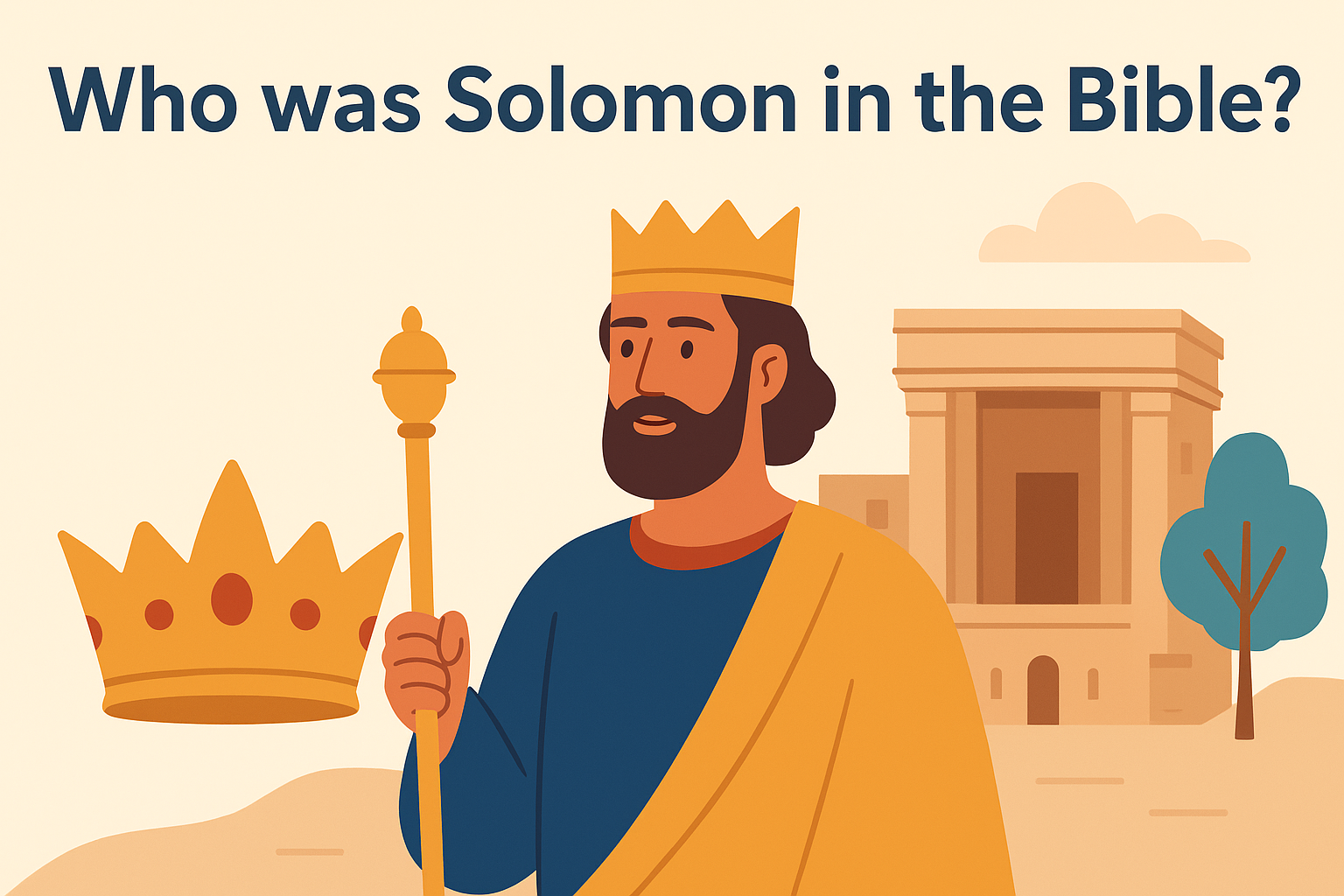
Solomon was a significant figure in the Bible, known for his wisdom, wealth, and writings. He was the son of King David and Bathsheba, and he ruled as the third king of Israel after Saul and David. His reign is often regarded as a golden age for Israel, characterized by prosperity, peace, and cultural achievements.
Solomon is perhaps best known for his wisdom, which he famously received from God. When given the chance to ask for anything, Solomon requested wisdom to govern his people effectively (1 Kings 3:5-14). This request pleased God, who granted him not only wisdom but also riches and honor, making him one of the most renowned kings in history.
Solomon’s Early Life and Ascension to the Throne
Solomon was born in Jerusalem, the second child of King David and Bathsheba. His early life was marked by the tumultuous events surrounding his family. After the death of his older brother, Solomon became the heir to the throne. David, his father, faced significant challenges in choosing a successor, as several of his other sons also sought the position. However, the prophet Nathan and Bathsheba advocated for Solomon, leading to his anointing as king (1 Kings 1:28-39).
The Wisdom of Solomon
One of the most remarkable aspects of Solomon’s reign was his unparalleled wisdom. The biblical narrative highlights a famous story illustrating this wisdom. Two women came to him, each claiming to be the mother of the same baby. Solomon proposed to cut the baby in half and give each woman half of the child. The real mother immediately offered to give up her claim, revealing her true love for the child (1 Kings 3:16-28). This story not only showcased Solomon’s wisdom but also established his reputation as a fair and discerning ruler.
The Construction of the Temple
Under Solomon’s leadership, Israel reached remarkable heights, not least with the construction of the First Temple in Jerusalem. David had long desired to build a temple for the Lord but was instructed by God that his son Solomon would fulfill this task (1 Chronicles 28:6). Solomon began the construction around the fourth year of his reign, dedicating the temple to the worship of Yahweh. The temple became the center of Israel’s religious life and symbolized God’s presence among His people (1 Kings 6).
The Temple’s Significance
The Temple was not merely a building; it was a crucial element of Israel’s identity and faith. It housed the Ark of the Covenant, which represented God’s covenant with His people. The dedication of the Temple, described in 1 Kings 8, included elaborate ceremonies and prayers, emphasizing its importance as a place of worship and sacrifice. Solomon’s prayer during the dedication reflects his understanding of God’s greatness and the need for His continued guidance and forgiveness.
Solomon’s Writings
In addition to his political and architectural achievements, Solomon is traditionally credited with several biblical books, including Proverbs, Ecclesiastes, and the Song of Solomon. These writings explore themes of wisdom, love, the meaning of life, and the nature of human existence. Proverbs, in particular, is a collection of sayings and teachings that emphasize the importance of wisdom and understanding in daily life.
Wisdom Literature
Solomon’s contributions to wisdom literature have had a lasting impact on Judeo-Christian thought. The Book of Proverbs offers practical advice on living a righteous life, while Ecclesiastes reflects on the fleeting nature of worldly pursuits and the search for meaning. The Song of Solomon, also known as the Song of Songs, is a poetic celebration of love and desire, often interpreted as an allegory of God’s love for His people.
Solomon’s Legacy and Downfall
Despite his wisdom and accomplishments, Solomon’s life was not without flaws. As he aged, he became entangled with foreign women and allowed their idolatrous practices to influence his faith and the nation of Israel. This disobedience to God’s commandments led to his eventual downfall and the division of the kingdom after his death (1 Kings 11:1-13). His story serves as a cautionary tale about the dangers of turning away from God, even for those who are granted wisdom and favor.
Solomon’s legacy is complex, marked by both great achievements and significant failures. He is remembered as a wise king who built a magnificent temple and penned profound writings, yet his life also serves as a reminder of the consequences of straying from God’s path. His story invites readers to reflect on the importance of wisdom, obedience, and faithfulness in their own lives.
The Role of Solomon in Israel’s History
Solomon’s reign marked a pivotal moment in the history of Israel, a time when the nation reached its zenith in terms of power, wealth, and cultural influence. Under his leadership, Israel became a significant player in the ancient Near East, engaging in trade and diplomacy with neighboring kingdoms. This period of peace allowed for economic prosperity and the flourishing of arts and culture. Solomon’s wisdom was not only evident in his governance but also in how he managed international relations, fostering alliances that contributed to Israel’s stability.
International Relations and Trade
Solomon’s era was characterized by extensive trade networks. He established commercial ties with far-reaching territories, including Egypt and Phoenicia. The famous Queen of Sheba visited Solomon, drawn by his renown for wisdom and wealth (1 Kings 10:1-13). This visit not only reinforced Solomon’s status but also demonstrated the importance of diplomatic relationships in maintaining peace and prosperity. The trade routes established during his reign played a crucial role in the economic development of Israel, showcasing Solomon as a ruler who understood the value of strategic alliances.
The Influence of Solomon’s Foreign Marriages
Another significant aspect of Solomon’s reign was his numerous marriages to foreign women. While these alliances were politically motivated, they had profound spiritual repercussions. Solomon married many women from different cultures, including Moabite, Ammonite, Edomite, Sidonian, and Hittite princesses. Unfortunately, these unions led him to adopt foreign gods and practices, ultimately straying from the worship of Yahweh (1 Kings 11:1-8). This shift in allegiance had disastrous consequences for Israel, leading to God’s judgment and the eventual division of the kingdom after Solomon’s death.
Theological Implications of Solomon’s Choices
Solomon’s life raises important theological questions about the nature of faithfulness and the consequences of disobedience. Despite his wisdom, he succumbed to temptation and allowed his heart to be turned away from God. This narrative serves as a reminder that wisdom alone is not sufficient; it must be accompanied by a steadfast commitment to God. The decline of Solomon’s faith illustrates how easily one can drift away from the path of righteousness, emphasizing the need for vigilance in one’s spiritual journey.
Lessons from Solomon’s Life
Solomon’s life offers numerous lessons that remain relevant today. First, his pursuit of wisdom highlights the importance of seeking God’s guidance in all aspects of life. While he began with a sincere desire to govern wisely, his later choices reflect how easily one can be led astray. This serves as a warning about the dangers of complacency and the necessity of continual spiritual growth and accountability.
The Balance of Wealth and Spiritual Integrity
Additionally, Solomon’s story illustrates the potential pitfalls of wealth and power. His immense riches and accomplishments did not shield him from the consequences of his actions. This prompts reflection on the relationship between material success and spiritual integrity. Believers are encouraged to seek first the Kingdom of God and prioritize their relationship with Him over worldly pursuits (Matthew 6:33). Solomon’s downfall serves as a cautionary tale that material blessings should not distract one from their foundational commitment to God.
Reflection on Solomon’s Writings
Solomon’s contributions to the Bible through his writings provide a profound insight into human experience. The Book of Proverbs is rich with practical wisdom that can guide everyday decisions. Its teachings encourage readers to pursue knowledge and understanding, emphasizing that the fear of the Lord is the beginning of wisdom (Proverbs 1:7). Ecclesiastes invites readers to ponder the meaning of life and the futility of human endeavors apart from God, while the Song of Solomon beautifully portrays love and intimacy. Each of these works reflects Solomon’s multifaceted understanding of life, love, and faith.
Encouraging Personal Growth through Solomon’s Wisdom
Engaging with Solomon’s writings can inspire personal growth and spiritual maturity. His reflections encourage believers to navigate life’s complexities with discernment and purpose. The themes of love, the search for meaning, and the quest for wisdom resonate deeply, prompting readers to consider their own lives and priorities. These writings serve not only as historical artifacts but as timeless guides for those seeking to align their lives with God’s will.
The Enduring Legacy of Solomon
Solomon’s legacy is one of complexity, marked by great achievements and significant failures. He is remembered as a wise king who built a magnificent temple and authored profound literature, yet his life also demonstrates the consequences of turning away from God. The duality of his legacy invites reflection on the importance of wisdom, obedience, and faithfulness in one’s spiritual journey. Solomon’s story challenges believers to pursue a deeper relationship with God, ensuring that wisdom is rooted in a commitment to His ways.
Ultimately, the life of Solomon teaches that true wisdom is not merely about knowledge or understanding but about living in accordance with God’s principles. His reign serves as a historical backdrop for understanding the importance of faithfulness, the dangers of idolatry, and the pursuit of a life that honors God above all else.
For further exploration of biblical wisdom, consider reading about how Solomon’s teachings in Proverbs can apply to modern life, or learn more about the significance of the Temple in Jerusalem. You can find more information in these articles: the significance of Solomon’s wisdom and the importance of the Temple in Jerusalem.