
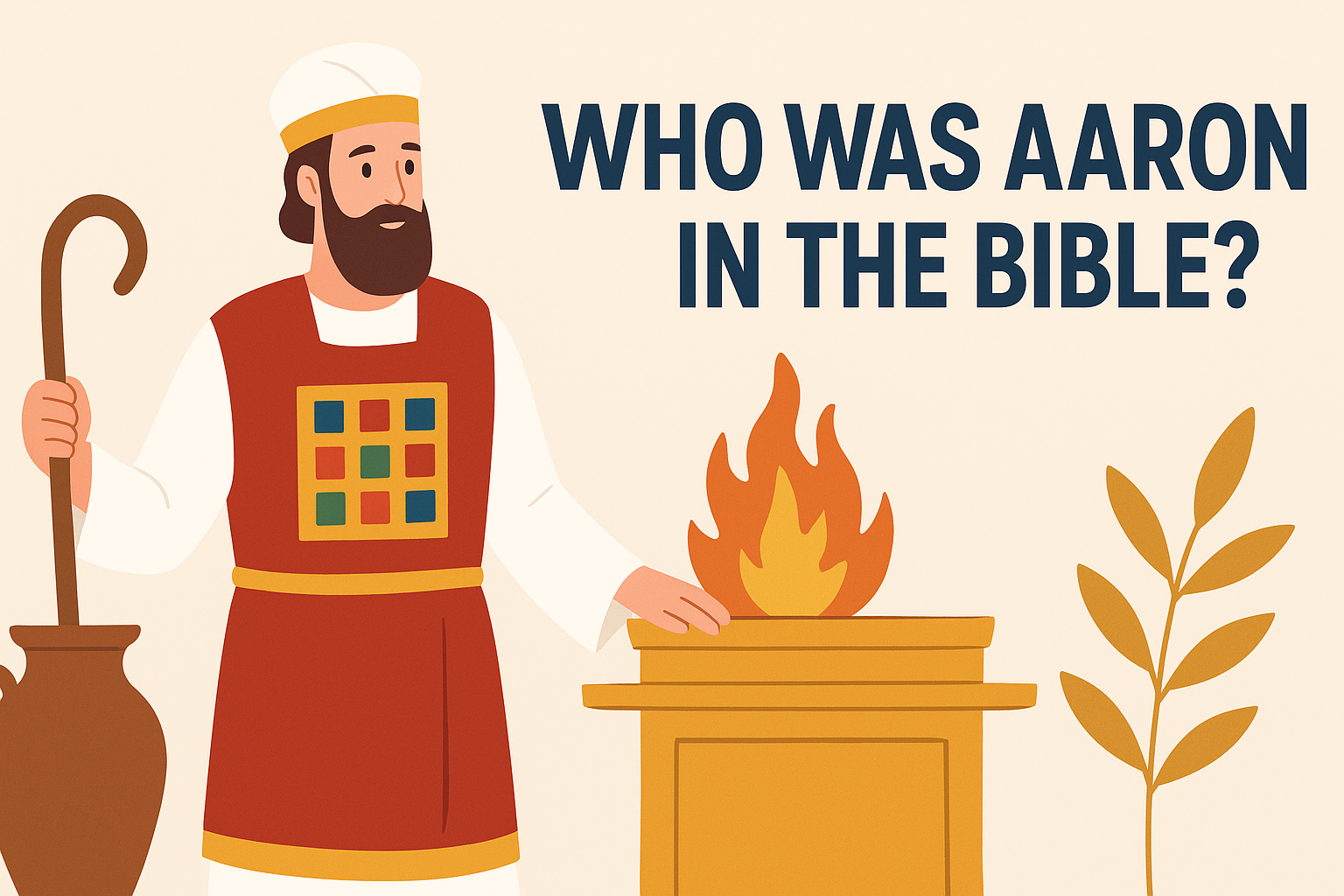
Aaron was a prominent figure in the Bible, known primarily as the older brother of Moses and the first high priest of Israel. He played a crucial role in the Exodus story, serving as Moses’ spokesperson and assisting in leading the Israelites out of slavery in Egypt. His significance extends beyond his familial relationship with Moses, as he was instrumental in establishing the priestly system that would serve the Israelites for generations.
Throughout the biblical narrative, Aaron is depicted as a mediator between God and the people. He was chosen by God to perform sacred rituals and maintain the spiritual life of the Israelite community. His life and actions are chronicled mainly in the books of Exodus, Leviticus, Numbers, and Deuteronomy.
Family Background and Early Life
Aaron was born into the Levi tribe, one of the twelve tribes of Israel, during a time when the Israelites were enslaved in Egypt. His parents were Amram and Jochebed, who were also descendants of Levi (Exodus 6:20). Aaron had three siblings: Miriam, his older sister, and Moses, his younger brother. The family’s lineage is significant, as it establishes Aaron’s role within the priestly line.
According to Exodus 2:1-10, Aaron was born shortly before Moses. When Moses was an infant, their mother placed him in a basket and set him afloat on the Nile River to save him from Pharaoh’s decree to kill all Hebrew boys. Miriam, watching from a distance, later brought their mother to nurse Moses when Pharaoh’s daughter found him. This early connection between the siblings laid the foundation for their later collaboration in leading the Israelites.
Aaron’s Role in the Exodus
When God called Moses to lead the Israelites out of Egypt, He appointed Aaron to assist him. The two brothers worked together to confront Pharaoh and demand the release of the Hebrew people. In Exodus 4:14-16, God tells Moses that Aaron will be his spokesperson, emphasizing Aaron’s role as a leader and communicator.
During the plagues that God inflicted upon Egypt, Aaron played a vital role in demonstrating God’s power. For instance, in Exodus 7:10-12, Aaron threw down his staff before Pharaoh, and it became a serpent, showcasing God’s authority over the Egyptian magicians. This act was just one of many where Aaron served as a sign of God’s presence and power.
The Establishment of the Priesthood
One of Aaron’s most significant contributions was the establishment of the priesthood. In Exodus 28, God commands Moses to set Aaron and his sons apart for the priestly duties. This included wearing special garments, such as the ephod and breastplate, which symbolized their sacred responsibilities (Exodus 28:1-4). Aaron was appointed as the first high priest, and his lineage became the foundation for the Levitical priesthood.
The priestly role involved performing sacrifices, offering prayers, and conducting rituals to maintain the relationship between God and His people. Leviticus 9 describes Aaron’s first offerings as high priest, where he successfully interceded for the people, and God’s glory appeared among them. This moment marked the beginning of the sacrificial system that would be central to Israelite worship.
Aaron’s Challenges and Failures
Despite his esteemed position, Aaron faced challenges and made significant mistakes. One of the most notable incidents occurred while Moses was on Mount Sinai receiving the Ten Commandments. The people, feeling abandoned, pressured Aaron to create a golden calf as an idol for them to worship (Exodus 32:1-6). Aaron yielded to their demands and fashioned the idol, which led to God’s anger and a severe judgment on the Israelites.
“They gave their gold to Aaron, and he melted it down and molded it into the shape of a calf. Then they said, ‘O Israel, these are the gods who brought you out of Egypt!’” (Exodus 32:4, NLT).
This incident illustrates Aaron’s human weaknesses and susceptibility to peer pressure, despite his high calling. When confronted by Moses, Aaron attempted to shift the blame, saying that the people were “prone to evil” (Exodus 32:22). This event serves as a reminder of the frailty of human leaders, even those chosen by God.
Aaron’s Legacy and Death
Aaron’s legacy is significant in the context of Israel’s religious practices. As the first high priest, he set the standard for future priests and the rituals that would define Israelite worship. The Day of Atonement, the sacrificial system, and various festivals were all influenced by the practices established during Aaron’s time.
Aaron’s death is recorded in Numbers 20:22-29. He died on Mount Hor, and his son Eleazar succeeded him as high priest. The Israelites mourned for thirty days, reflecting the deep respect they had for Aaron’s leadership and service. His burial marked the end of an era, but his influence continued through the priestly lineage that followed.
Aaron’s life is a complex tapestry of leadership, failure, and redemption. He embodies the struggles of faith and the importance of obedience to God, serving as a reminder that even those chosen for great tasks can falter. His role in the Exodus and the establishment of the priesthood has left an indelible mark on the history of Israel and the development of biblical faith.
Aaron’s Relationship with Moses
The dynamic between Aaron and Moses is pivotal in understanding Aaron’s role in the biblical narrative. As brothers, they shared an extraordinary bond, yet their relationship was also characterized by a division of responsibilities. While Moses was called by God to lead the Israelites, Aaron was appointed to support him. This partnership highlights the importance of collaboration in fulfilling God’s plans.
Moses often turned to Aaron for assistance, especially in public speaking. Due to Moses’s initial reluctance to speak before Pharaoh (Exodus 4:10), God appointed Aaron to be his mouthpiece. This partnership illustrates how God equips individuals differently for specific tasks, emphasizing that leadership often involves working together and relying on one another’s strengths.
The Significance of Aaron’s Priestly Garments
Aaron’s priestly garments were not merely ceremonial but deeply symbolic. The garments included the ephod, breastplate, robe, and turban, each representing different aspects of his role as high priest. The breastplate, for instance, contained twelve stones, each engraved with the name of one of the tribes of Israel, symbolizing Aaron’s responsibility to represent the people before God (Exodus 28:15-21).
Furthermore, the garments served as a reminder of the holiness required in approaching God. They were designed with great care and detail, illustrating the seriousness of Aaron’s role in mediating between God and the Israelites. This aspect of Aaron’s life connects to the broader theme of holiness in the Bible, where approaching God requires reverence and preparation.
Aaron’s Role in the Israelite Community
Aaron’s influence extended beyond his priestly duties. He was a leader among the Israelites, often called upon to guide and counsel the people. After the Exodus, Aaron played a significant role in the Israelites’ journey through the wilderness. He was involved in key decisions and served as a stabilizing force during times of uncertainty.
For instance, during the rebellion of Korah, Dathan, and Abiram, Aaron’s position as high priest was challenged. The rebellion highlighted the tensions within the community as they questioned Moses’s and Aaron’s leadership (Numbers 16). Aaron’s response to this crisis demonstrated his commitment to God and the people, as he interceded on behalf of the Israelites to stop a plague sent by God (Numbers 16:46-48). This act of intercession illustrated the vital role of the priesthood in mediating God’s judgment.
Aaron’s Spiritual Legacy
Aaron’s life and actions had a lasting spiritual legacy that shaped Israelite worship and theology. The sacrificial system he helped establish became a central aspect of Israelite religion, emphasizing the need for atonement and reconciliation with God. The rituals he performed were integral to the community’s relationship with God, reflecting the seriousness of sin and the necessity of sacrifice.
The Day of Atonement, which Aaron was involved in, symbolizes the overarching theme of redemption in the Bible. On this day, Aaron would enter the Most Holy Place to offer sacrifices for himself and the people, underscoring the need for purification and reconciliation (Leviticus 16). This practice foreshadows the ultimate sacrifice of Jesus Christ, who is often seen as our high priest and the fulfillment of the sacrificial system.
Lessons from Aaron’s Life
Aaron’s life offers several lessons relevant to contemporary believers. First, it reminds us of the importance of humility and accountability in leadership. Despite his high status, Aaron’s failures show that no one is above temptation or error. His story encourages leaders to remain vigilant and humble, recognizing their need for God’s guidance.
Second, Aaron’s role as a mediator highlights the significance of intercession in the Christian faith. Just as Aaron interceded for the people of Israel, Christians are called to pray for others and stand in the gap for those in need. This act of intercession reflects the heart of God and His desire for His people to support one another.
Finally, Aaron’s legacy serves as a reminder of God’s grace. Despite his failures, Aaron was chosen by God and used for His purposes. This truth resonates with believers today, reminding them that God can use imperfect people to accomplish His plans. It emphasizes that God’s call is not based on human perfection but on His sovereign choice and grace.
Conclusion: Aaron’s Enduring Influence
Aaron’s life is a testament to the complexities of leadership, faith, and divine calling. His story is woven into the fabric of Israel’s history and religious practices, influencing the spiritual journey of countless generations. As the first high priest, he established a model for worship and mediation that resonates throughout the Bible. Aaron’s legacy serves as a reminder of the importance of faithfulness, humility, and the transformative power of God’s grace in the lives of His people.