
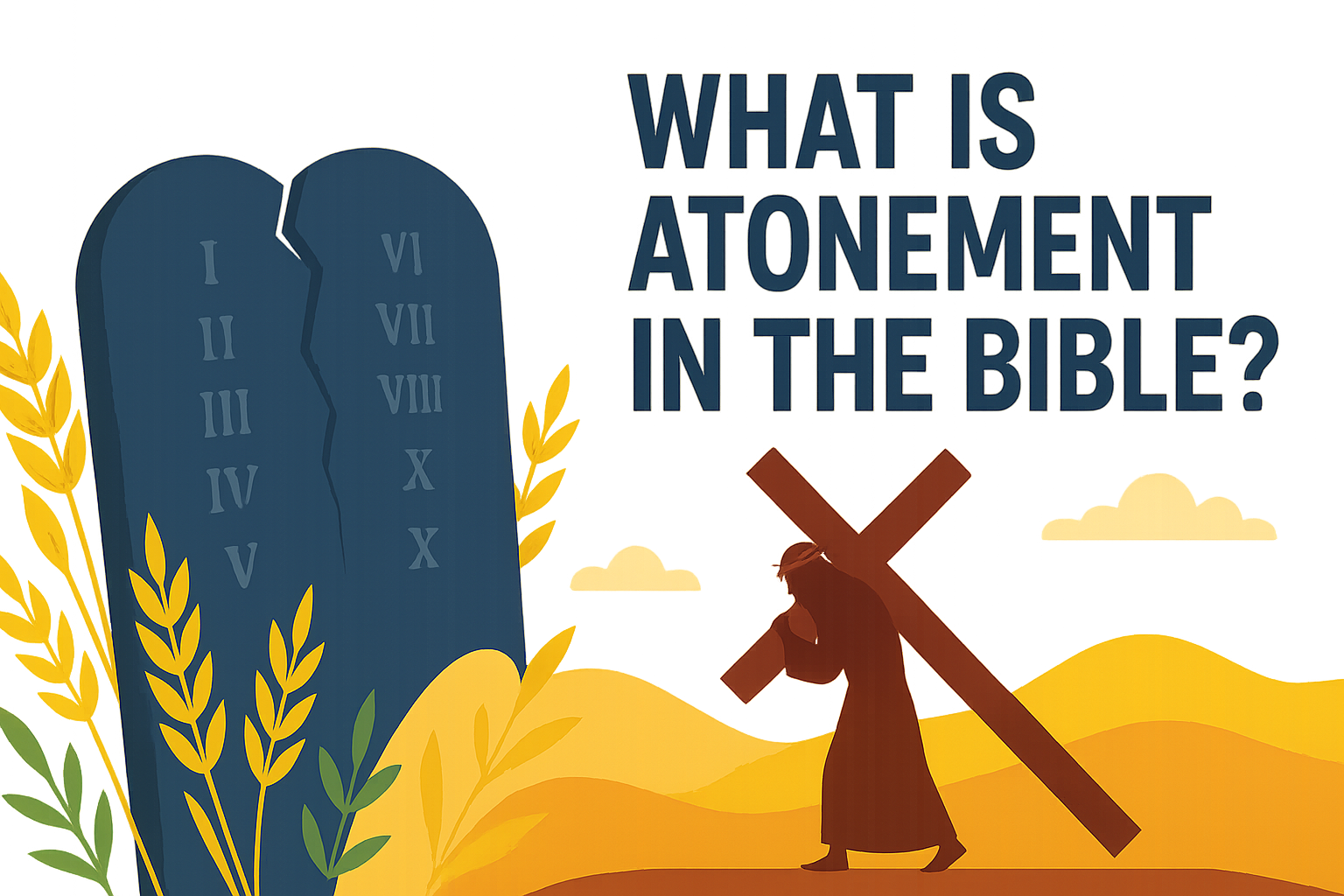
Atonement in the Bible refers to the process by which reconciliation is achieved between God and humanity, primarily through the sacrifice of Jesus Christ. It is a central theme in Christian theology that illustrates how sin creates a separation from God, and atonement provides a means to restore that broken relationship. This concept is rooted in the idea of sacrifice, where something of value is given to make amends for wrongdoing.
The term “atonement” itself can be understood as “at-one-ment,” indicating the restoration of unity. In the biblical context, atonement encompasses various practices and teachings found throughout both the Old and New Testaments, reflecting God’s desire for a relationship with His people despite their failures.
The Old Testament Foundation of Atonement
The idea of atonement is deeply embedded in the Old Testament, particularly within the sacrificial system established in the Mosaic Law. According to Leviticus 17:11, blood is central to atonement, as it represents life. The sacrifices of animals, such as lambs or goats, were required to atone for the sins of the people. These sacrifices served as a temporary measure, pointing toward a more profound solution that would come later.
The Day of Atonement
One of the most significant events related to atonement in the Old Testament is Yom Kippur, or the Day of Atonement. This day is described in Leviticus 16 and involved a ceremonial process where the high priest would enter the Holy of Holies to offer sacrifices for the sins of the nation of Israel. Two goats were used during this ritual: one was sacrificed, and the other, known as the scapegoat, was sent into the wilderness, symbolically carrying away the sins of the people. This act illustrated the seriousness of sin and the need for a mediator to restore the relationship with God.
The Role of Sacrifice
Throughout the Old Testament, the theme of sacrifice is prevalent. Sacrifices were required for various offenses, and they served to demonstrate the cost of sin. In Exodus 29:36-37, God instructs the Israelites on how to offer sacrifices to atone for sin, emphasizing that these acts were essential for maintaining holiness and fellowship with Him.
The sacrifices were not merely rituals; they symbolized a deeper spiritual truth. Hebrews 9:22 states, “Without the shedding of blood, there is no forgiveness.” This underscores the gravity of sin and the necessary payment for it. The animal sacrifices were a foreshadowing of the ultimate sacrifice that would be made in the New Testament.
Atonement in the New Testament
The New Testament reveals the fulfillment of the Old Testament sacrificial system through the life, death, and resurrection of Jesus Christ. His sacrifice is described as the ultimate atonement for humanity’s sins. In Romans 3:23-25, Paul explains that all have sinned and fall short of God’s glory, but through faith in Jesus, believers are justified freely by God’s grace through the redemption that came by Christ Jesus.
The Lamb of God
In John 1:29, John the Baptist refers to Jesus as “the Lamb of God who takes away the sin of the world.” This title connects Jesus to the sacrificial lambs of the Old Testament, indicating that His death would be the final and complete atonement for sin. Unlike the temporary animal sacrifices, Jesus’ sacrifice is sufficient for all time, providing a permanent solution for sin.
The Concept of Substitution
Central to the understanding of atonement in the New Testament is the concept of substitution. Jesus took upon Himself the punishment that humanity deserved for its sins. In 1 Peter 2:24, it is written that “He Himself bore our sins in His body on the tree.” This substitutionary atonement means that Jesus suffered the consequences of sin on behalf of humanity, allowing believers to be reconciled with God.
Grace and Faith
The New Testament teaches that atonement is received through faith, not by works. Ephesians 2:8-9 emphasizes that it is by grace through faith that individuals are saved, not by their own efforts. This grace is extended to all who believe in Jesus Christ, offering forgiveness and restoration to a right relationship with God.
As believers understand their need for atonement and accept the sacrifice of Jesus, they are invited to live in the freedom and joy that comes from their restored relationship with God. The atonement, therefore, is not only a theological concept but also a transformative experience for those who accept it.
Theological Implications of Atonement
The concept of atonement carries profound theological implications that extend beyond the act of forgiveness. It speaks to the nature of God, humanity’s sinfulness, and the relationship between the two. Atonement illustrates God’s justice and mercy. On one hand, God’s holiness demands justice for sin, while on the other hand, His love seeks restoration and reconciliation with His creation.
In Romans 5:8, it is stated that “God demonstrates His own love for us in this: While we were still sinners, Christ died for us.” This verse emphasizes that atonement is not merely a legal transaction but is deeply rooted in God’s love. Understanding this duality helps believers appreciate the depth of God’s character and the lengths He will go to restore the relationship with humanity.
The Relationship Between Atonement and Salvation
Atonement is intricately linked to the broader theme of salvation in the Christian faith. Salvation encompasses justification, sanctification, and ultimately glorification, all of which are made possible through the atoning work of Christ. Justification, the act of being declared righteous before God, is a direct result of accepting Christ’s atonement. In 2 Corinthians 5:21, Paul writes, “God made Him who had no sin to be sin for us, so that in Him we might become the righteousness of God.” This exchange is central to understanding how atonement leads to salvation.
Moreover, sanctification, the process of becoming more like Christ, is fueled by the realization of what Christ has done for believers. The acknowledgment of atonement encourages a life of gratitude, obedience, and a desire to reflect Christ’s character in everyday life. This transformative process is not about earning salvation but responding to the grace that has been freely given.
Atonement and the Church’s Mission
The atonement of Christ is not just a personal matter; it has implications for the mission of the Church. The Great Commission, found in Matthew 28:19-20, calls believers to make disciples of all nations. This mission is grounded in the message of atonement, as it offers hope and reconciliation to a world in need. The Church is tasked with sharing the good news of Christ’s sacrificial death and resurrection, emphasizing that through Him, individuals can find forgiveness and peace with God.
Furthermore, understanding atonement shapes how the Church engages with social issues. The message of reconciliation extends beyond spiritual matters and calls for justice, mercy, and compassion in communities. As believers embody the principles of atonement, they are prompted to advocate for those who are marginalized and to work toward healing broken relationships in society.
The Role of Faith in Atonement
While atonement is a divine act initiated by God, the human response is equally important. Faith plays a critical role in the application of atonement. In John 3:16, it is stated that “whoever believes in Him shall not perish but have eternal life.” This underscores the necessity of faith in receiving the benefits of atonement. Belief in Christ’s sacrificial death and resurrection is essential for experiencing the fullness of what atonement offers.
Faith is not merely intellectual assent; it involves trust and reliance on Christ. This trust is what allows individuals to embrace the forgiveness and restoration that atonement brings. It transforms the believer’s life, enabling them to live in light of their new identity in Christ. As Galatians 2:20 expresses, “I have been crucified with Christ and I no longer live, but Christ lives in me.” This transformation highlights the ongoing effect of atonement in a believer’s life.
Follow-Up Questions for Reflection
To deepen understanding of atonement, it is beneficial to reflect on some follow-up questions:
- How does the understanding of atonement influence your relationship with God?
- In what ways can you share the message of atonement with others in your community?
- How does the concept of substitutionary atonement impact your view of justice and mercy?
- What role does faith play in your everyday life, and how does it relate to your understanding of atonement?
Conclusion: The Transformative Power of Atonement
Atonement is a multifaceted concept that encompasses God’s desire for reconciliation, the necessity of sacrifice, and the transformative power of faith. It is not just about the forgiveness of sins; it is about entering into a restored relationship with God that impacts every area of life. Through the atoning work of Christ, believers are invited to experience a profound change that leads to a life marked by love, grace, and purpose. Understanding atonement fosters a deeper appreciation for God’s character and compels believers to extend that same grace to others.
For further exploration, you may read about the significance of sacrifice in the Bible and how it relates to the concept of atonement, as well as the transformative nature of faith in the lives of believers.