
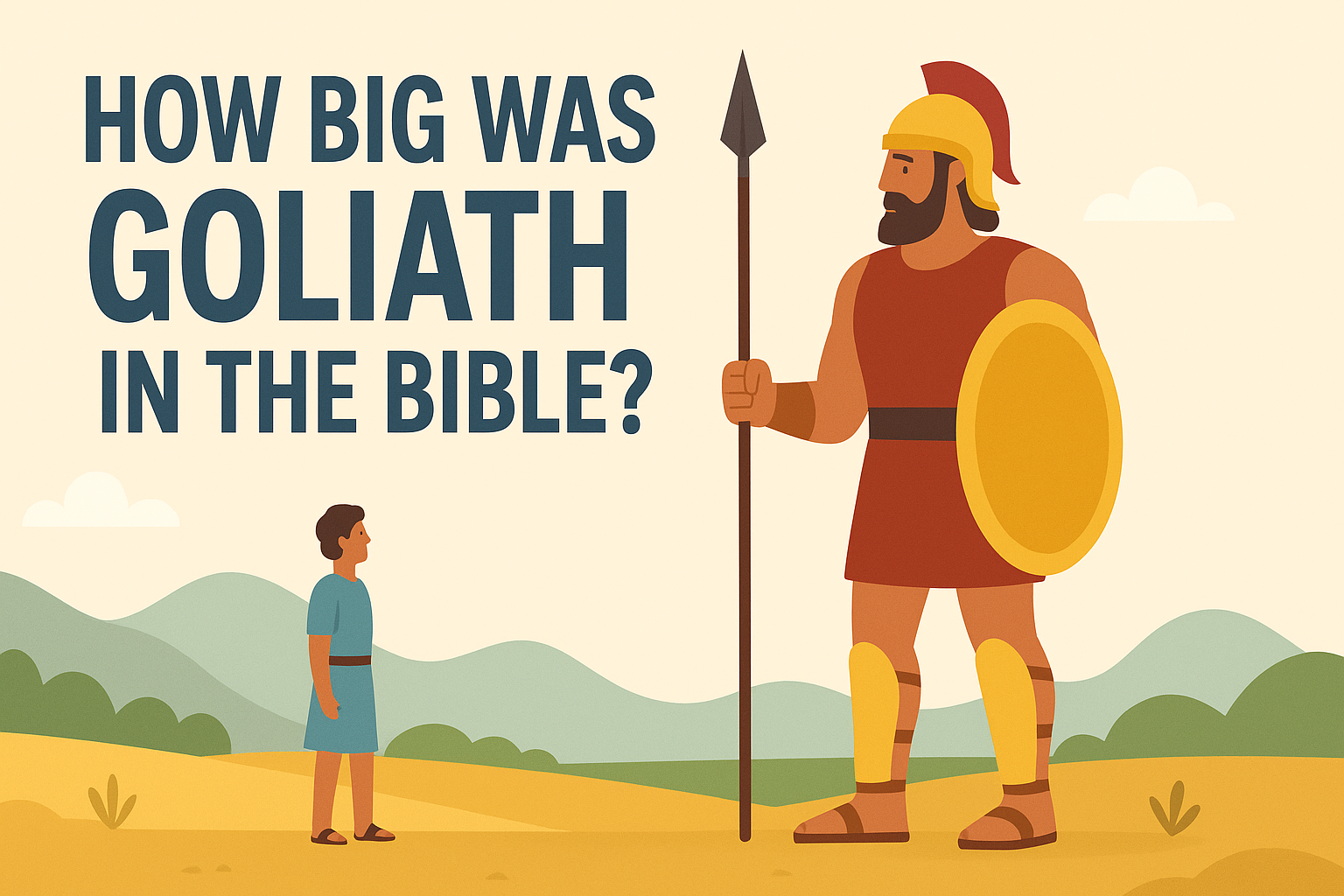
In the Bible, Goliath is described as a giant who challenged the Israelites during a standoff between the Philistines and the Israelites. His height is often cited as being around nine feet, which is a significant stature compared to an average man today. Specifically, 1 Samuel 17:4 states that Goliath was “six cubits and a span” tall, which many scholars interpret to be approximately nine feet nine inches (about 2.97 meters) if using the standard cubit measurement of 18 inches.
This towering height contributed to his fearsome reputation and made him a formidable opponent in battle. However, the exact measurement of Goliath’s height can vary based on different interpretations of the ancient measurements used in biblical texts. Nevertheless, his size played a crucial role in the story of David and Goliath, symbolizing the overwhelming odds faced by young David when he stepped forward to confront the giant.
Understanding Goliath’s Measurements
To grasp how big Goliath was, it is essential to understand the measurements used in the Bible. A “cubit” is an ancient unit of length based on the distance from a person’s elbow to the tip of their fingers. This measurement can vary slightly, but it is generally accepted to be around 18 inches. A “span” is thought to be half a cubit, or about 9 inches.
When we calculate Goliath’s height based on the biblical description of “six cubits and a span,” we find:
- 6 cubits = 6 x 18 inches = 108 inches
- 1 span = 9 inches
- Total height = 108 inches + 9 inches = 117 inches
Converting inches to feet, Goliath’s height would be about 9 feet 9 inches. This staggering height would have made him a giant by any standards, especially in the context of ancient warfare.
Context of Goliath’s Challenge
Goliath’s size was not just a physical attribute; it was part of a larger narrative about fear and faith. The Philistine champion stood before the Israelite army, issuing a challenge for single combat. He taunted the Israelites for forty days, creating an atmosphere of fear and despair among Saul’s soldiers. The sight of such a giant, coupled with his intimidating presence, made many Israelites feel hopeless.
In 1 Samuel 17:8-11, Goliath’s challenge is described in detail. He asked, “Why are you all coming out to fight? I am the Philistine champion, but you are only the servants of Saul. Choose one man to come down here and fight me!” The response from the Israelite army was one of fear, illustrating the psychological impact of Goliath’s size and bravado.
Historical and Cultural Significance
The figure of Goliath is not merely a story of a giant but also reflects the cultural and historical context of the time. The ancient Near East often depicted giants in mythologies and folklore as beings of immense power and strength. Goliath’s portrayal as a giant serves to highlight the themes of courage and faith that run throughout the biblical narrative.
In the face of overwhelming odds, David’s faith in God becomes the focal point of the story. Goliath’s size symbolizes not just physical might but also the spiritual challenges that believers face. David, a young shepherd, was not intimidated by Goliath’s stature. Instead, he relied on his faith and previous experiences defending his flock against lions and bears. This contrast between Goliath’s physical power and David’s spiritual strength is central to the story.
Different Interpretations of Goliath’s Height
While the traditional interpretation of Goliath’s height is around nine feet nine inches, some scholars debate the accuracy of the measurements. Some argue that the original text may have been misinterpreted or that the numbers could have been exaggerated over time. There are alternative translations that suggest Goliath may have been around six feet tall, which aligns more closely with what might be considered a “giant” in the context of the ancient world but does not reflect the extreme height often associated with him.
Additionally, the Septuagint, an ancient Greek translation of the Hebrew Scriptures, provides a different measurement for Goliath, suggesting he was only about four cubits and a span tall, which would be approximately six feet nine inches. This has led to further discussions about the textual variations and the significance of Goliath’s portrayal in different cultures.
Implications of Goliath’s Size
The implications of Goliath’s size extend beyond mere measurements. His giant stature serves as a metaphor for the challenges that individuals face in their lives. Goliath represents the obstacles that seem insurmountable, the fears that paralyze, and the doubts that creep into the hearts of those who believe. David’s victory over Goliath is not just a tale of physical conquest; it is a powerful reminder that faith can overcome even the most daunting challenges.
As we reflect on the story of David and Goliath, it becomes clear that Goliath’s size is significant not only for its literal implications but also for the spiritual lessons it conveys. The narrative encourages believers to confront their fears and challenges, no matter how great, with faith and courage.
The Role of Goliath in the Narrative of David
Goliath’s presence in the story of David is pivotal, as it sets the stage for one of the most famous confrontations in biblical history. The narrative unfolds in a time of tension between the Israelites and the Philistines, highlighting the stark contrast between David, a humble shepherd, and Goliath, a warrior of immense stature. This juxtaposition emphasizes the theme of God working through the unlikely and the underestimated to achieve His purposes.
David’s decision to face Goliath was not merely a matter of physical confrontation; it was also a testament to his faith in God. In 1 Samuel 17:37, David declares that the Lord who delivered him from the paw of the lion and the bear would also deliver him from Goliath. This statement reveals the foundation of David’s confidence: a deep-seated belief that God was with him, regardless of Goliath’s intimidating size.
Spiritual Lessons from Goliath’s Size
The story of David and Goliath offers profound spiritual lessons, particularly in understanding how believers can face their own “giants.” Goliath’s size can symbolize various challenges in life, such as fear, doubt, or seemingly insurmountable obstacles. The narrative encourages believers to recognize that their strength does not come from their own abilities but from their faith in God.
David’s victory serves as a reminder that God often chooses the weak to confound the strong, as seen in 1 Corinthians 1:27, which states that God has chosen the foolish things of the world to shame the wise. This principle is central to understanding why Goliath’s immense size is significant; it amplifies the miracle of David’s victory and exemplifies God’s power to work through those who trust in Him.
Goliath’s Armor and Weaponry
In addition to Goliath’s height, his armor and weaponry further illustrate his formidable presence. 1 Samuel 17:5-7 describes Goliath’s armor as being made of bronze, weighing around 125 pounds, and his spear as having a head that weighed approximately 15 pounds. These details contribute to the image of Goliath as not just a giant in stature but also a well-equipped warrior.
This aspect of Goliath’s character adds depth to the narrative, showcasing the contrast between his physical might and David’s simple shepherd’s tools. David approached the battle with a sling and five smooth stones, relying on his skill and faith rather than heavy armor or weapons. This choice further emphasizes the lesson that God does not require conventional means to achieve victory.
Goliath’s Legacy in Christian Thought
Goliath’s legacy extends beyond the biblical narrative into broader Christian thought and culture. Over the centuries, the story has been interpreted in various ways, often serving as a metaphor for the struggles believers face in their spiritual journeys. Goliath represents the fears and doubts that can loom large in the lives of individuals, while David symbolizes faith and trust in God’s provision.
In sermons and teachings, the story of David and Goliath has been used to encourage congregations to confront their own giants. It serves as a reminder that faith, courage, and reliance on God can lead to victory over life’s challenges. This narrative has also inspired countless works of art, literature, and popular culture, reinforcing its significance in the collective understanding of faith and triumph.
Questions for Reflection
As we consider the story of Goliath and its implications, it is helpful to reflect on some meaningful questions:
- What “giants” do you face in your own life, and how can you confront them with faith?
- In what ways does the story of David and Goliath inspire you to trust in God’s provision during difficult times?
- How can the lessons learned from Goliath’s size and David’s faith apply to your personal challenges and spiritual growth?
- What does Goliath’s defeat teach us about the nature of God’s power and intervention in our lives?
Conclusion: The Significance of Goliath’s Size
In conclusion, Goliath’s towering height and formidable presence serve as powerful symbols in the biblical narrative of David and Goliath. His size represents the overwhelming challenges that believers may face, while David’s victory illustrates the triumph of faith over fear. The story encourages us to confront our own giants with courage and trust in God, reminding us that, regardless of the obstacles, faith can lead to remarkable victories. Goliath’s legacy continues to inspire believers today to face their challenges head-on, grounded in the assurance that they are not alone in their struggles.