
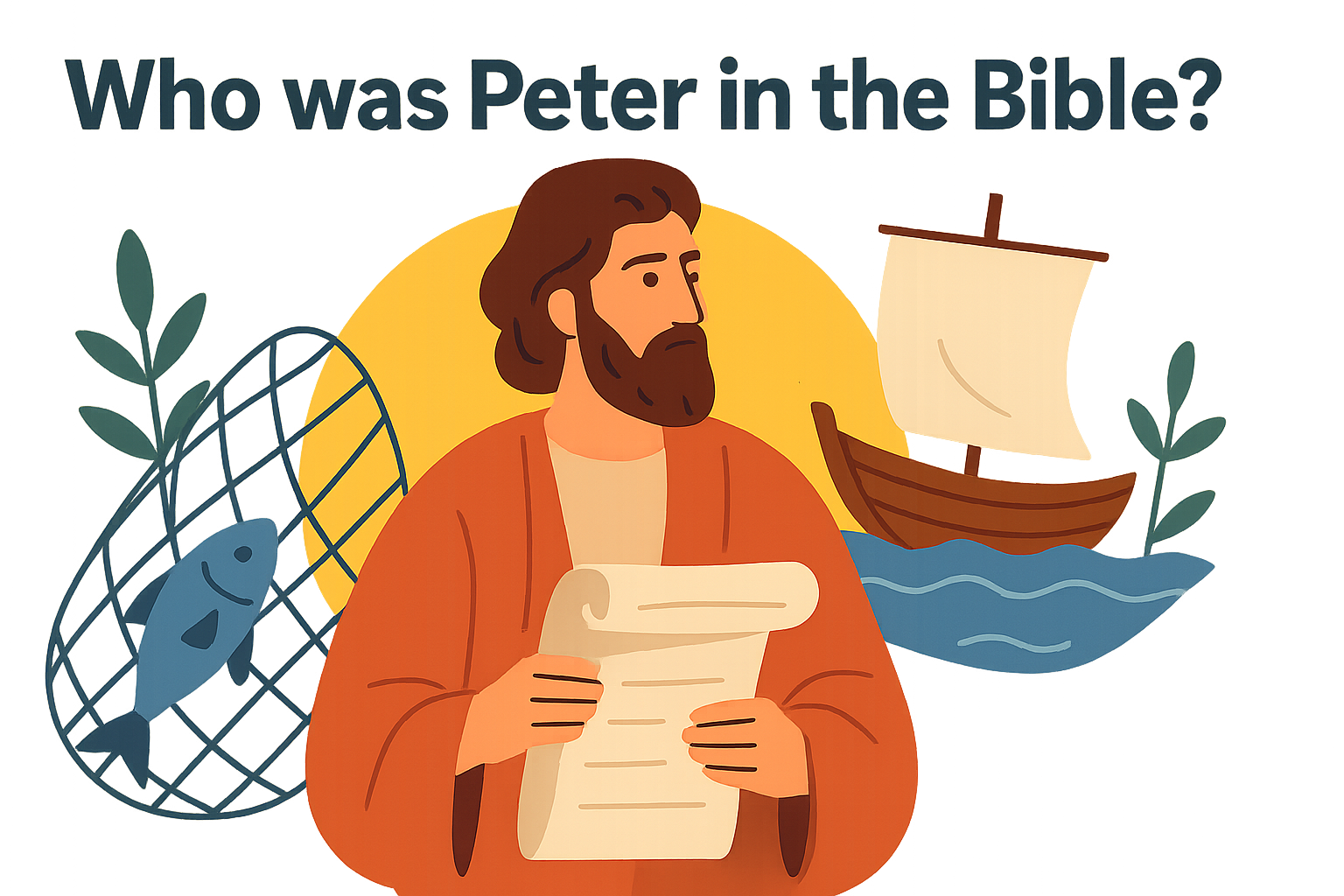
Peter, originally named Simon, was one of the twelve apostles of Jesus Christ and is often regarded as a leading figure in the early Christian church. He played a pivotal role in the ministry of Jesus and is known for his strong personality, deep faith, and eventual leadership in spreading the gospel. Peter’s story is significant in the New Testament, showcasing his journey from a fisherman to a foundational leader of Christianity.
Peter is primarily known for his close relationship with Jesus, his boldness in proclaiming the faith, and his struggles with doubt and fear. His life is documented in the Gospels and the Book of Acts, where we see his transformation and the impact he had on the early church.
Early Life and Calling
Peter was born in Bethsaida, a town on the northern shore of the Sea of Galilee. He was the son of Jonah (or John, depending on the translation) and worked as a fisherman alongside his brother Andrew. The Gospels tell us that Jesus called Peter while he was fishing. In Matthew 4:19, Jesus said, “Come, follow me, and I will show you how to fish for people.” This marked the beginning of Peter’s journey as a disciple.
Peter’s initial call exemplifies the transformative nature of following Christ. He left his fishing nets and family to become a follower of Jesus, indicating his willingness to embrace a new life and mission. This act of faith was a significant turning point, showcasing his readiness to respond to Jesus’s invitation.
Peter’s Role Among the Apostles
Throughout the Gospels, Peter stands out among the apostles. He is often depicted as the spokesperson for the group, demonstrating both courage and impulsiveness. In Matthew 16:16, Peter boldly declares Jesus as the Messiah, saying, “You are the Messiah, the Son of the living God.” Jesus responds by affirming Peter’s role, stating that upon this rock, He will build His church (Matthew 16:18). This moment highlights Peter’s importance in the foundation of Christian belief.
Peter’s leadership is further illustrated during significant events in Jesus’s ministry. He was present at the Transfiguration (Matthew 17:1-9), where he witnessed Jesus’s divine glory alongside Moses and Elijah. This experience deepened Peter’s understanding of Jesus’s identity and mission.
Peter’s Denial and Restoration
Despite his strong faith, Peter was not without his failures. During the events leading to Jesus’s crucifixion, Peter famously denied knowing Jesus three times, as predicted by Jesus (Luke 22:34). This moment of weakness highlights the human struggle with fear and doubt, even among the most devoted followers. After the resurrection, Jesus restored Peter by asking him three times if he loved Him (John 21:15-17). This act of restoration emphasized forgiveness and Peter’s renewed commission to lead and care for Jesus’s followers.
Peter’s Leadership in the Early Church
Following Jesus’s ascension, Peter emerged as a prominent leader in the early Christian community. The Book of Acts details his significant role in the growth of the church. In Acts 2, Peter delivers a powerful sermon on the day of Pentecost, leading to the conversion of about three thousand people (Acts 2:41). His bold proclamation of the gospel exemplifies the transformation he underwent after receiving the Holy Spirit.
Peter’s leadership continued as he performed miracles, preached, and provided guidance to the early believers. Acts 3 recounts how he healed a lame man at the Temple, further establishing his authority and the power of God working through him. His ability to perform miracles was not just for show; it was a testament to the message he preached and the presence of the Holy Spirit in his life.
Peter’s Writings
Peter is traditionally attributed as the author of two epistles in the New Testament: First Peter and Second Peter. These letters address various issues faced by early Christians, including suffering, false teachings, and the importance of living a holy life. In First Peter 5:8, he warns believers to “Stay alert! Watch out for your great enemy, the devil.” This advice reflects his own experiences and the challenges faced by the early church.
In Second Peter, he emphasizes the importance of growing in faith and knowledge of Jesus Christ (2 Peter 3:18). His writings serve as a source of encouragement and instruction, demonstrating his pastoral heart and commitment to strengthening the church.
Peter’s Legacy and Martyrdom
Peter’s legacy extends beyond his life as an apostle. He is often considered the first pope in Catholic tradition, highlighting his role as a foundational leader in the church. Church history suggests that Peter was martyred in Rome during the reign of Emperor Nero, likely crucified upside down, as he felt unworthy to die in the same manner as Jesus. This act of martyrdom is a powerful testament to his faith and commitment to the teachings of Christ.
Peter’s life serves as an inspiration for many Christians today. His journey from a fisherman to a leading apostle illustrates the transformative power of faith and the call to follow Jesus. His struggles and triumphs reflect the human experience in the pursuit of a relationship with God.
Peter’s Influence on Christian Doctrine
Peter’s contributions to early Christian doctrine are profound and far-reaching. As a primary witness to Jesus’s life, death, and resurrection, his insights and teachings helped shape the beliefs of the early church. His understanding of Jesus as the Messiah laid the groundwork for the Christian understanding of salvation and the nature of Christ.
In his sermons and letters, Peter emphasizes the significance of faith in Christ for salvation. For example, in Acts 4:12, he states, “There is salvation in no one else, for there is no other name under heaven given to people by which we must be saved.” This declaration underscores the exclusivity of salvation through Jesus, a core tenet of Christian belief that continues to resonate today.
Additionally, Peter’s teachings on the second coming of Christ and the final judgment are foundational to Christian eschatology. In his epistles, he speaks about living in anticipation of Christ’s return, urging believers to conduct themselves in holiness and righteousness. This perspective encourages Christians to maintain hope and remain steadfast in their faith amidst trials and tribulations.
Peter’s Interactions with Gentiles
One of the pivotal moments in Peter’s ministry was his interaction with Gentiles, which significantly expanded the reach of the gospel. In Acts 10, Peter receives a vision from God that challenges the Jewish dietary laws and signifies that the gospel is for all people, not just the Jews. His encounter with Cornelius, a Roman centurion, marks a significant turning point in the early church, symbolizing the inclusion of Gentiles into the faith.
This moment illustrates Peter’s evolving understanding of God’s plan and serves as a model for embracing diversity within the Christian community. It highlights the importance of breaking down barriers and welcoming all individuals into the fold of faith, regardless of their background or ethnicity.
Challenges and Conflicts
Despite his significant role, Peter faced numerous challenges and conflicts throughout his ministry. His leadership was not without controversy, particularly regarding the relationship between Jewish and Gentile believers. In Galatians 2, the Apostle Paul recounts an incident where he confronted Peter for withdrawing from eating with Gentiles, fearing criticism from other Jewish Christians. This confrontation reveals the complexities of early church dynamics and the ongoing struggle to define the nature of community in Christ.
Peter’s journey illustrates the necessity of humility and accountability among leaders. Acknowledging and addressing conflict is essential for unity within the church. Peter’s willingness to learn and grow from his experiences serves as a reminder of the importance of maintaining an open heart and mind in the face of differing opinions.
Peter’s Legacy in Christian Tradition
Peter’s legacy transcends his lifetime and continues to influence Christian thought and practice. He is often depicted as the “rock” of the church, symbolizing stability and foundation. This metaphor has had significant implications for various Christian denominations, particularly within Catholicism, where Peter is venerated as the first pope.
The celebration of St. Peter’s feast day on June 29th reflects the enduring reverence for his contributions to Christianity. Many churches are named after him, and he is often depicted in art and literature as a symbol of faith and perseverance. His life story serves as a source of encouragement for believers, reminding them of the transformative power of God’s grace and the call to live out their faith boldly.
Meaningful Reflections on Peter’s Life
Peter’s life invites several meaningful reflections for Christians today. One critical question is how we respond to our own moments of doubt and failure. Just as Peter experienced restoration after his denial, believers are reminded that there is always an opportunity for redemption and recommitment to Christ. How can we embrace forgiveness in our lives and extend it to others?
Additionally, Peter’s journey encourages Christians to consider their role in the church and the broader community. Are we stepping into leadership when called, or are we hesitant due to fear or uncertainty? Peter’s boldness serves as a model for taking risks in faith and proclaiming the gospel to those around us.
Furthermore, Peter’s interactions with Gentiles challenge Christians to reflect on inclusivity within their communities. How can we break down barriers and foster a spirit of acceptance for all individuals, regardless of their background? This is essential for embodying the love of Christ and living out the message of the gospel in a diverse world.
Conclusion: The Enduring Impact of Peter
Peter’s life and ministry remain an integral part of Christian history and theology. His transformation from a fisherman to a foundational leader illustrates the profound impact of following Christ and the call to serve others. Through his teachings, actions, and legacy, Peter continues to inspire believers to live out their faith with courage, humility, and love. His story reminds us that even the most flawed individuals can be used by God to accomplish great things in His kingdom.
For further exploration of Peter’s role and significance in Christianity, consider reading more about his teachings in 1 Peter and his interactions with the early church in Acts 10.