
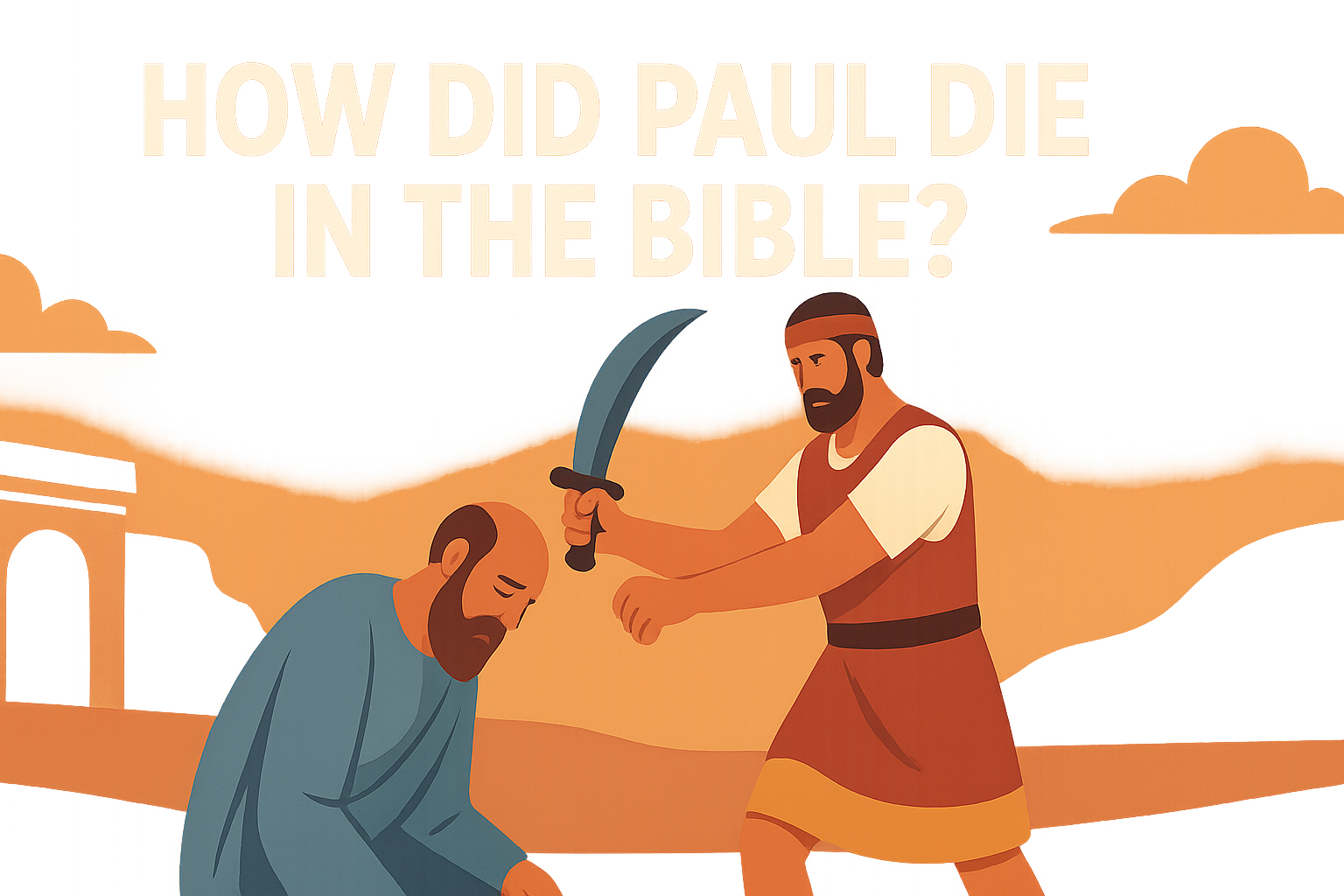
The Bible does not provide a specific account of the death of the Apostle Paul, but historical tradition offers some insights. Most scholars agree that Paul was martyred in Rome around A.D. 64-68 during the reign of Emperor Nero. This conclusion is primarily based on early Christian writings and historical records, rather than direct biblical texts.
While the New Testament does not describe Paul’s death, it does offer context about his life and ministry. Paul faced numerous hardships and persecutions for his faith, which suggests that his death would have been in line with the challenges he encountered throughout his life.
Paul’s Ministry and Persecutions
To understand how Paul died, it is essential to consider the life he led as a devoted apostle. Paul, originally known as Saul of Tarsus, was a fervent persecutor of Christians before his dramatic conversion on the road to Damascus. This pivotal moment is detailed in Acts 9, where he encounters Jesus and subsequently becomes one of the most influential figures in early Christianity.
Throughout his ministry, Paul faced significant opposition. He was imprisoned multiple times, faced beatings, stonings, and shipwrecks, as recorded in 2 Corinthians 11:23-27. These experiences highlight the dangers he willingly embraced to spread the Gospel. His letters, or epistles, often reflect a sense of urgency and dedication to his mission, emphasizing the sacrifices he made for Christ.
Historical Context of Paul’s Death
While the Bible does not detail Paul’s death, historical sources provide a broader context. Early church historians, such as Eusebius and Tertullian, suggest that Paul was martyred in Rome. Eusebius, in his work “Ecclesiastical History,” notes that Paul was beheaded, a method commonly used for Roman citizens facing execution.
This tradition is supported by the understanding that Paul was a Roman citizen, which granted him certain rights. Crucifixion was typically reserved for non-citizens. According to this tradition, after a trial, Paul was executed by beheading, which was seen as a more honorable death for someone of his status.
Scriptural Insights on Suffering
While there is no explicit account of Paul’s death in the Bible, several passages reflect his understanding of suffering and martyrdom. In 2 Timothy 4:6-8, Paul writes, “As for me, my life has already been poured out as an offering to God. The time of my death is near. I have fought the good fight, I have finished the race, and I have remained faithful.” These verses suggest that Paul anticipated his impending death and viewed it as a culmination of his faithful service to God.
Paul’s writings often encourage believers to endure suffering for the sake of Christ. In Philippians 1:29, he states, “For you have been given not only the privilege of trusting in Christ but also the privilege of suffering for him.” This perspective indicates that Paul viewed suffering as a necessary part of the Christian journey, which aligns with the tradition of his martyrdom.
The Role of Nero and the Persecution of Christians
The historical context of Paul’s death is also intertwined with the persecution of Christians under Emperor Nero. Following the Great Fire of Rome in A.D. 64, Nero sought to scapegoat Christians, blaming them for the disaster. This led to widespread persecution, and many Christian leaders, including Paul, were targeted.
During this period, Christians faced severe punishments, including imprisonment, torture, and execution. The environment in Rome was hostile to those who preached the Gospel, and it is within this context that Paul was likely martyred. His unwavering commitment to proclaiming Christ in the face of danger exemplifies the early church’s resilience.
Traditions Surrounding Paul’s Death
Various traditions exist regarding the circumstances of Paul’s death. One prominent tradition is that he was executed near the site of his imprisonment, possibly on the Ostian Way, where many believe he was buried. The Basilica of Saint Paul Outside the Walls in Rome is traditionally believed to be the burial site of Paul, honoring his legacy as a martyr for the faith.
Additionally, the story of Paul’s martyrdom has inspired many artistic representations throughout history, further solidifying his role as a symbol of faith and endurance in the face of persecution. These traditions, while not directly found in Scripture, reflect the significance of Paul’s life and death in Christian history.
Theological Implications of Paul’s Death
Paul’s death as a martyr carries deep theological significance within the Christian faith. His willingness to suffer and ultimately die for his beliefs reinforces the concept of sacrifice that is central to Christianity. In many ways, Paul mirrors the suffering of Christ, who also faced persecution and death for the redemption of humanity. This parallel serves as a powerful reminder to Christians about the cost of discipleship and the call to take up their own crosses (Matthew 16:24).
Furthermore, Paul’s martyrdom can be seen as a fulfillment of Jesus’ words in John 15:20, where He warns His followers that they will face persecution just as He did. The early church viewed martyrdom as a testament to one’s faith, and Paul’s death exemplifies the ultimate expression of loyalty to Christ. His life and death encourage believers to reflect on their commitment and willingness to endure hardships for the sake of the Gospel.
Paul’s Legacy in the Early Church
The impact of Paul’s life and death extended far beyond his immediate context. His letters laid the groundwork for much of Christian theology and practice. The early church revered him not only as a missionary but also as a theologian who articulated the doctrine of salvation by faith, grace, and the role of the Holy Spirit. His teachings continue to resonate with Christians today, forming the basis of Christian beliefs and practices.
After his death, Paul’s letters were circulated among the early Christians, reinforcing his teachings and encouraging others to remain steadfast in their faith. His martyrdom served as a rallying point for the early church, inspiring countless believers to stand firm in their faith despite the risk of persecution. The stories of his trials and ultimate sacrifice became part of the Christian narrative, motivating future generations to uphold their beliefs in the face of adversity.
Questions for Reflection
Understanding the circumstances surrounding Paul’s death raises several important questions for contemporary believers:
- What does Paul’s example of suffering for the faith teach us about our own challenges and trials in life?
- How can we apply Paul’s teachings on endurance and faithfulness in our daily lives?
- In what ways can we support and encourage fellow believers who are facing persecution or hardship for their faith?
- How does the historical context of Paul’s martyrdom inform our understanding of modern Christian persecution?
These questions invite believers to reflect on their own faith journeys. They encourage a deeper understanding of what it means to live out one’s faith, especially in a world that can be hostile to Christian beliefs. By considering Paul’s life and death, Christians are reminded of the importance of perseverance and the transformative power of faith.
Conclusion: The Enduring Influence of Paul’s Martyrdom
While the Bible may not provide a detailed account of how Paul died, the surrounding historical context and early Christian traditions paint a vivid picture of his martyrdom. Paul’s death is not just a historical event; it is a powerful testimony of faith, resilience, and commitment to the Gospel. His willingness to face death for the sake of Christ serves as an enduring inspiration for believers throughout the ages.
As Christians reflect on Paul’s life and death, they are encouraged to embrace their faith fully, recognizing that suffering and sacrifice can lead to spiritual growth and deeper intimacy with God. The legacy of Paul reminds believers that true faith often comes at a cost, but the rewards of following Christ far outweigh the challenges faced along the way.
For more insights on the Apostle Paul and his contributions to Christianity, you can explore Paul’s Letters and Their Impact and learn about the broader context of early Christian persecution in The History of Christian Martyrdom.