
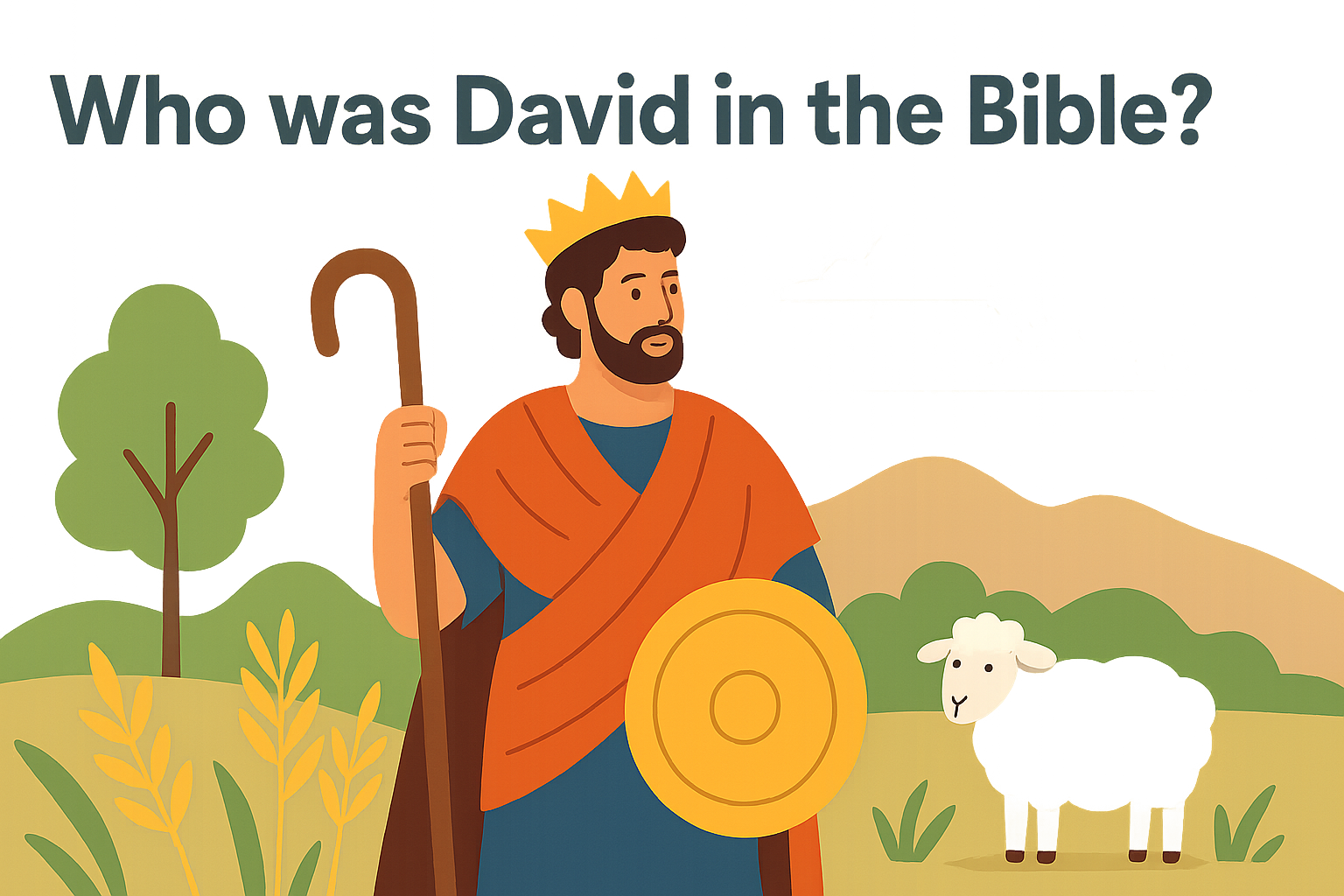
David, a central figure in the Bible, is best known for being the second king of Israel, succeeding Saul. He is revered not only as a king but also as a poet, warrior, and a man after God’s own heart. His life story is chronicled primarily in the books of 1 Samuel, 2 Samuel, and 1 Chronicles, where his rise from a humble shepherd to a powerful ruler is vividly depicted.
David’s significance extends beyond his kingship; he is also credited with composing many of the Psalms, which express a wide range of human emotions and deep devotion to God. His legacy and lineage are particularly important in the Christian faith, as Jesus Christ is often referred to as the “Son of David,” linking him to David’s royal line and fulfilling Old Testament prophecies.
Early Life and Anointing
David was the youngest son of Jesse, a shepherd from Bethlehem. He grew up tending sheep, which played a significant role in shaping his character and skills. The story of David’s anointing begins in 1 Samuel 16. God instructed the prophet Samuel to visit Jesse’s household to select a new king, as Saul had fallen out of favor with God. When Samuel arrived, he initially judged Jesse’s older sons, but God directed him to David, who was still a boy at the time.
“The Lord doesn’t see things the way you see them. People judge by outward appearance, but the Lord looks at the heart.” (1 Samuel 16:7 NLT)
This moment marked the beginning of David’s journey toward kingship, even though he would not take the throne immediately. His anointing was a divine selection, emphasizing that God values inner character over outward appearances.
David and Goliath
One of the most famous stories about David is his battle with Goliath, a giant Philistine warrior. This event is recorded in 1 Samuel 17. The Israelite army was terrified of Goliath, who challenged anyone to fight him. David, still a young shepherd, volunteered to confront the giant, trusting in God’s protection.
Equipped with only a sling and five smooth stones, David declared his faith in God as he faced Goliath. He famously stated that the battle belongs to the Lord. With a single stone, David struck Goliath in the forehead, leading to the giant’s defeat. This victory not only elevated David’s status among the Israelites but also demonstrated his faith and courage.
David’s Rise to Power
Following his victory over Goliath, David became a national hero. He served in King Saul’s court, playing music to soothe the troubled king. However, as David’s popularity grew, Saul became jealous, leading to a tumultuous relationship between the two. Saul attempted to kill David on several occasions, forcing David to flee and live as a fugitive.
During this time, David gathered a group of followers and became a leader of men. He demonstrated remarkable leadership and military skills, defeating various enemies, including the Philistines. Despite being pursued by Saul, David refused to harm him when he had the chance, showing his respect for Saul as God’s anointed king.
David Becomes King
After Saul’s death in battle, David was anointed king over the tribe of Judah, as described in 2 Samuel 2. He ruled from Hebron for seven years before becoming king over all Israel. His reign is marked by significant accomplishments, including the unification of the tribes of Israel and the establishment of Jerusalem as the capital city.
David’s desire to build a temple for the Lord is an important aspect of his story. Though God did not allow him to build it due to his history of warfare, He promised David that his descendants would establish a lasting dynasty. This promise is known as the Davidic Covenant, emphasizing God’s commitment to David’s lineage.
David’s Flaws and Repentance
Despite his many accomplishments, David was not without his flaws. One of the most notable events in his life was his sin with Bathsheba, the wife of Uriah the Hittite. This story unfolds in 2 Samuel 11. David, seeing Bathsheba bathing, summoned her to the palace, leading to an adulterous affair. When Bathsheba became pregnant, David attempted to cover up his sin by bringing Uriah home from battle. When Uriah refused to go home, David arranged for him to be placed in the front lines of battle, resulting in Uriah’s death.
David’s actions were met with divine judgment. The prophet Nathan confronted David, leading him to realize the gravity of his sin. David’s heartfelt repentance is beautifully expressed in Psalm 51, where he pleads for mercy and forgiveness, acknowledging his transgressions before God.
Legacy and Impact
David’s life was marked by both triumphs and failures, yet he is remembered as a man who sought after God’s heart. His relationship with God, expressed through the Psalms, reflects a deep longing for connection and worship. David’s legacy continues to influence millions, serving as a reminder of the importance of faith, repentance, and reliance on God’s grace.
In the New Testament, David’s lineage is significant as it connects directly to Jesus Christ. The genealogies presented in the Gospels of Matthew and Luke trace Jesus’ ancestry back to David, fulfilling the messianic prophecies that the Messiah would come from David’s line.
The Psalms: David’s Spiritual Legacy
David is often credited with writing a significant portion of the Book of Psalms, a collection of songs and prayers that express a wide array of emotions, from joy to sorrow, despair to hope. The Psalms reveal David’s deep relationship with God as he navigated the complexities of life, including his struggles, victories, and failures. They serve as a testament to his faith and are used in both personal devotion and corporate worship by believers today.
Many Psalms reflect David’s experiences as a shepherd, warrior, and king, but they also resonate with universal themes of human experience. For instance, Psalm 23, which begins with “The Lord is my shepherd,” encapsulates David’s understanding of God’s guidance and protection. This Psalm is cherished for its comforting imagery, showing how David found solace in God’s presence amid challenges.
David’s Relationship with Jonathan
Another significant aspect of David’s life was his deep friendship with Jonathan, the son of King Saul. Their bond is highlighted in 1 Samuel 18-20, where they make a covenant of loyalty to each other. Jonathan recognized David’s potential and supported him, even as his father Saul grew increasingly hostile toward David. Their friendship is often cited as an example of true loyalty and love, transcending family ties and political alliances.
Their relationship illustrates the importance of supportive friendships in the pursuit of God’s calling. In times of adversity, Jonathan’s encouragement played a crucial role in helping David remain steadfast in his faith and purpose. Their story prompts reflection on the nature of friendship and the impact it can have in our spiritual journeys.
David’s Military Campaigns and Leadership
David’s reign was characterized by numerous military campaigns that expanded and secured Israel’s territory. He faced formidable enemies, including the Philistines, Moabites, and Ammonites. These battles are detailed in 2 Samuel and highlight David’s strategic acumen and reliance on God for victory. His military successes solidified his reputation as a strong leader and helped unify the tribes of Israel under a single monarchy.
However, David’s leadership was not solely defined by military prowess. He also established a system of governance and justice, appointing officials to help administer the kingdom. His ability to balance power with humility is evident in his desire to seek God’s guidance in decision-making. This aspect of David’s leadership invites questions about the qualities of effective leaders and the importance of seeking divine wisdom in leadership roles.
The Davidic Covenant and Its Significance
The Davidic Covenant is a pivotal moment in the biblical narrative, found in 2 Samuel 7. God promised David that his lineage would endure forever, establishing a throne that would last for all time. This covenant is foundational for understanding the Messianic prophecies, as it points to Jesus Christ, who fulfills the promise of an everlasting kingdom.
This covenant underscores the theme of God’s faithfulness and the idea that God works through imperfect people to accomplish His divine purposes. David’s life exemplifies how God can use our strengths and weaknesses to bring about His plans. Reflecting on this covenant raises questions about God’s promises in our own lives and how we can trust in His faithfulness, even amidst challenges.
The Fall of David and Its Lessons
Despite his close relationship with God, David’s life was marred by significant moral failures, particularly in his later years. The consequences of his sin with Bathsheba extended beyond personal remorse, leading to turmoil within his family and kingdom. The rebellion of his son Absalom is a poignant example of how David’s choices impacted those around him, demonstrating the far-reaching effects of sin.
This part of David’s story serves as a sobering reminder of human frailty and the importance of accountability. David’s journey of repentance teaches believers about the necessity of confession and the hope of redemption. It encourages a deeper understanding of grace and the transformative power of God’s forgiveness.
David’s Death and Legacy
David’s reign lasted for forty years, and he died at the age of seventy. His son Solomon succeeded him, fulfilling the promise of the Davidic Covenant. David’s legacy is multifaceted; he is remembered as a mighty warrior, a compassionate leader, and a devoted servant of God. His life story encourages believers to pursue a relationship with God, seek forgiveness, and strive for righteousness.
David’s influence extends into the New Testament, where he is often referenced in relation to Jesus. The title “Son of David” signifies not just a familial connection but also the fulfillment of God’s promises through Jesus. This connection invites believers to explore the continuity between the Old and New Testaments, deepening their understanding of God’s overarching plan for humanity.
Conclusion: The Enduring Impact of David
David’s life serves as a rich tapestry of faith, leadership, and human experience. His story invites reflection on the complexities of our own lives, reminding us that despite our failures, God offers grace and redemption. The Psalms, his friendships, and his leadership provide valuable lessons on faithfulness, loyalty, and the importance of turning to God in every circumstance. As believers, we can draw inspiration from David’s life, understanding that our journeys are also part of a greater narrative woven by God’s hand.
To explore more about David’s spiritual impact, read about the significance of the Psalms in worship and devotion, or learn about the covenant promises that shape our understanding of God’s faithfulness today: the significance of the Psalms and the Davidic Covenant.