
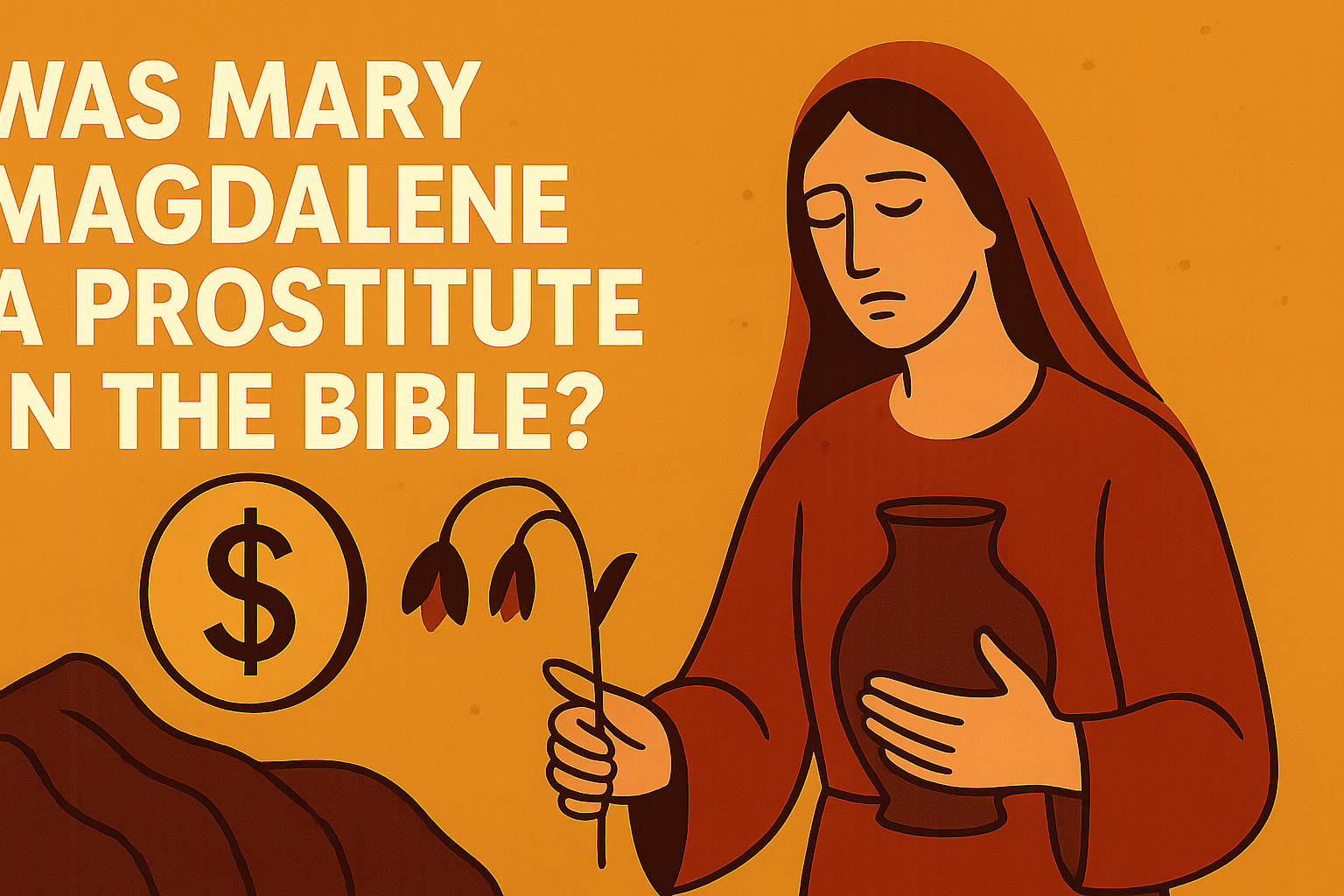
The question of whether Mary Magdalene was a prostitute in the Bible is a common misconception. The biblical texts do not explicitly label her as such, and there is no direct evidence in Scripture to support this claim.
Over the centuries, various interpretations and traditions have emerged that have conflated Mary Magdalene with other women in the Bible, particularly with the unnamed sinful woman who anointed Jesus’ feet. This has contributed to the stereotype of Mary as a fallen woman. However, a closer examination of the Scriptures reveals a different narrative.
Who Was Mary Magdalene?
Mary Magdalene is introduced in the Gospels as a devoted follower of Jesus. She is mentioned in all four Gospel accounts, indicating her significance in the early Christian community. The most notable references to her can be found in Luke 8:1-3, where it is stated that she had been healed by Jesus from seven demons. This healing transformed her life, and she subsequently became a prominent disciple.
Mary is often depicted as a woman of great faith and loyalty. She traveled with Jesus and the other disciples, supporting them as they preached the Gospel. Her transformation from a tormented individual to a faithful follower highlights her importance in Jesus’ ministry.
The Misconception of Mary Magdalene as a Prostitute
The association of Mary Magdalene with prostitution primarily stems from a misinterpretation of biblical texts and a blending of her identity with other figures. One of the most significant moments that contributed to this misunderstanding is found in Luke 7:36-50, where a sinful woman anoints Jesus’ feet with her tears and wipes them with her hair. This woman is never named, but over time, some have mistakenly identified her with Mary Magdalene.
It is essential to note that there is no scriptural basis for this identification. The woman in Luke’s account is described as a sinner, but her specific sins are not detailed, nor is she linked to Mary Magdalene. In fact, Mary Magdalene is introduced later in the Gospel narrative, indicating that they are distinct individuals.
Tradition vs. Scripture
Throughout history, church tradition has played a significant role in shaping the perception of biblical figures. In the early centuries of Christianity, Mary Magdalene was often portrayed as a penitent sinner. This portrayal was popularized by Pope Gregory I in a sermon around the year 591 AD, where he conflated her with the sinful woman from Luke 7. This interpretation influenced Christian thought for centuries and contributed to the image of Mary as a prostitute.
However, modern biblical scholarship emphasizes the importance of distinguishing between tradition and what is actually written in Scripture. The Gospels do not provide any evidence to support the idea that Mary Magdalene was a prostitute. Instead, they portray her as a significant figure in Jesus’ life and ministry.
Mary Magdalene’s Role in the Resurrection
One of the most profound aspects of Mary Magdalene’s story is her role in the resurrection of Jesus. The Gospels reveal that she was one of the first witnesses to the empty tomb and the first to encounter the risen Christ. In John 20:11-18, after finding the tomb empty, Mary encounters Jesus and is entrusted with the message of His resurrection. Jesus tells her to go and share this news with the disciples, marking her as the first evangelist of the resurrection.
This pivotal role highlights her importance in the early Christian community and underscores her status as a faithful follower of Jesus. Rather than being remembered as a fallen woman, Mary Magdalene is honored as a key figure in the foundation of the Christian faith.
Conclusion: A Woman of Faith and Devotion
In summary, the characterization of Mary Magdalene as a prostitute is not supported by biblical texts. Instead, she is portrayed as a woman of faith, loyalty, and significant importance in the life of Jesus. Understanding her true role requires a careful examination of Scripture, free from the distortions of tradition and misconception. Mary Magdalene should be remembered for her devotion to Christ and her vital role in the early church.
Mary Magdalene in Early Christian Writings
To further understand Mary Magdalene’s role and the misconceptions surrounding her, it is helpful to consider the broader context of early Christian writings. While the New Testament Gospels provide the primary accounts of her life, other texts from the early Christian era, such as the Gospel of Mary, offer additional insights into her character and significance.
The Gospel of Mary, a text attributed to Mary Magdalene, presents her as a teacher and a source of spiritual wisdom. In this text, she is depicted engaging in deep theological discussions with the apostles, emphasizing her role as a leader in the early church. This portrayal contrasts starkly with the image of her as a repentant sinner and highlights her importance in the formation of Christian thought and community.
Additionally, the Gnostic texts, which were often marginalized by orthodox Christianity, illustrate how Mary Magdalene was viewed as a figure of enlightenment and divine knowledge. These writings challenge the traditional narratives and suggest that Mary was a significant leader rather than a fallen woman.
Misinterpretation Through the Ages
The conflation of Mary Magdalene with other biblical figures has persisted through the centuries, leading to a series of misinterpretations. The tradition of viewing her as a prostitute can be traced back to the early church’s efforts to define sin and redemption. By labeling Mary as a fallen woman, it provided a narrative of redemption that resonated with many believers.
However, this interpretation oversimplifies her story and undermines the complexity of her character. It is essential to recognize that the early church was also grappling with issues of gender and authority. In a male-dominated society, the elevation of Mary Magdalene as a key figure in Jesus’ life challenges traditional gender roles and highlights the contributions of women in the early church.
Theological Implications of Mary’s True Identity
Understanding Mary Magdalene’s true identity has significant theological implications. If she is viewed solely through the lens of sin and redemption, it reinforces a narrative that focuses on guilt and shame. However, recognizing her as a devoted disciple and a witness to the resurrection shifts the focus to themes of faith, hope, and transformation.
This perspective invites believers to reflect on their own journeys of faith. It emphasizes that regardless of past mistakes or societal labels, individuals can experience profound transformation through their relationship with Christ. Mary Magdalene’s story becomes a powerful testament to the possibility of redemption and the importance of faithfulness in one’s spiritual journey.
Mary Magdalene in Contemporary Discussions
In recent years, there has been a resurgence of interest in Mary Magdalene as a figure of empowerment and strength. Many scholars, theologians, and artists are reevaluating her legacy and challenging the traditional narratives that have long defined her. This renewed focus has led to a richer understanding of her role in the New Testament and beyond.
Contemporary works of art, literature, and film have sought to reclaim Mary Magdalene’s story, portraying her not just as a penitent sinner but as a powerful woman of faith. These interpretations encourage modern audiences to see Mary as a model for women in ministry and leadership, reflecting the original intent of her role in the early church.
Questions for Reflection
As we consider the life and legacy of Mary Magdalene, several questions arise that can deepen our understanding of her significance:
- What does Mary Magdalene’s story teach us about the role of women in the early church?
- How can we apply the themes of transformation and redemption found in her life to our own spiritual journeys?
- In what ways can we challenge societal labels that diminish the value of individuals, as seen in Mary’s experience?
- How can we promote a more accurate understanding of biblical figures in our communities today?
These questions invite further exploration of Mary Magdalene’s role and challenge us to rethink preconceived notions that have persisted throughout history.
Conclusion: Reclaiming Mary Magdalene’s Identity
Mary Magdalene’s identity as a significant follower of Christ rather than a mere symbol of sin is crucial for understanding her true role in the Gospels. By examining the evidence in Scripture and considering the historical context, we can appreciate her contributions to the early Christian community. Rather than being remembered as a fallen woman, Mary Magdalene should be celebrated as a symbol of faith, resilience, and leadership. The journey to reclaim her identity is not just about correcting a historical misconception but also about embracing the profound implications of her story for all believers today.